中文简体
中文简体 Français
 Deutsch
 italiano
Double-Faced Wool Fabric: Is the Coat Worth It?
Content
- 1 What Is Double-Faced Woolen Goods Fabric?
- 2 Why Double-Faced Wool Delivers Superior Warmth Without Bulk
- 3 How Double Faced Wool Fabric Differs From Standard Wool Coating
- 4 Common Fiber Compositions and Their Effect on Performance
- 5 Is a Double Faced Wool Coat Worth It? A Practical Assessment
- 6 Care and Maintenance to Protect Your Investment
What Is Double-Faced Woolen Goods Fabric?
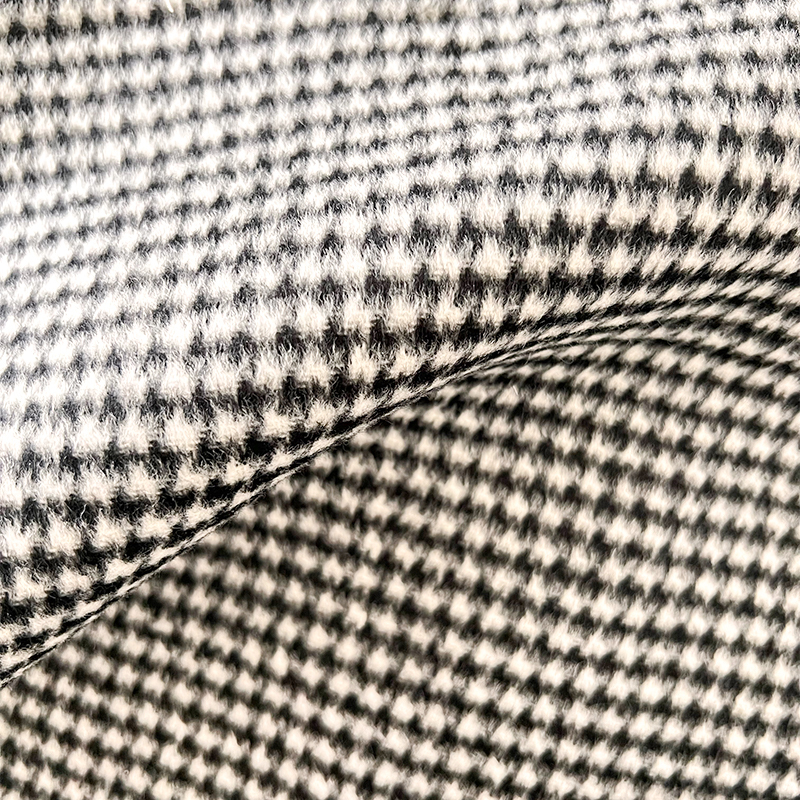
Double-faced woolen goods fabric is a technically advanced textile constructed from two distinct layers of wool cloth that are woven together on a specialized loom. Unlike conventional wool, which has a clear right side and a wrong side, double-faced fabric presents two finished, usable surfaces — making it inherently reversible and eliminating the need for a separate lining in finished garments. The two layers are loosely connected at their inner faces by interlocking yarns, which can be carefully separated at the seam edges during construction to allow the raw edges to be folded inward and finished invisibly.
This construction method originated in the Italian textile mills of Biella, a region long regarded as the global center of fine wool production. The technique demands precision at every stage — from yarn selection to loom configuration — because any inconsistency between the two layers results in a fabric that puckers, twists, or loses its characteristic flat drape. Only high-grade wool fibers with consistent micron counts and staple lengths are suitable for this process, which is one of the primary reasons double faced wool fabric commands a significant price premium over standard coating wools.
The fabric's weight typically falls between 550 and 800 GSM, reflecting the dual-layer structure. Despite this density, the absence of a lining keeps the total garment weight lower than many fully lined alternatives — a paradox that frequently surprises first-time buyers and is central to the fabric's enduring appeal in luxury outerwear.
Why Double-Faced Wool Delivers Superior Warmth Without Bulk
The thermal performance of double-faced woolen goods fabric is rooted in its structure. Each layer traps a pocket of still air between the fibers, and because both layers are bonded together at the core, these insulating air pockets are effectively doubled. Wool fiber itself is naturally crimped at the microscopic level, which creates even more air-trapping capacity within each individual yarn. The result is a fabric that delivers warmth-to-weight ratios comparable to much heavier single-layer coatings.
Wool's keratin protein structure also gives it a unique ability to absorb up to 30% of its own weight in moisture vapor before it begins to feel damp against the skin. In practical terms, this means a double-faced wool coat continues to insulate effectively even when the outer layer is exposed to light rain or damp air — a property synthetic fabrics cannot replicate. Combined with wool's natural wind resistance when tightly woven, the fabric creates a genuinely functional thermal barrier for winter conditions.
For context, a well-constructed double-faced wool coat rated for temperatures down to approximately 0°C performs comparably to a padded coat of significantly greater volume. This is the defining performance characteristic that sets the fabric apart: real warmth delivered in a streamlined, unpadded silhouette.
How Double Faced Wool Fabric Differs From Standard Wool Coating
Understanding what distinguishes double-faced fabric from conventional coating wool is essential for evaluating whether it suits your needs. The differences extend well beyond price point.
| Feature | Double-Faced Wool | Standard Wool Coating |
|---|---|---|
| Layer structure | Two bonded layers, both finished | Single layer, one right side |
| Lining required | No | Usually yes |
| Reversibility | Yes (when seams are split-finished) | No |
| Typical GSM range | 550–800 GSM | 300–500 GSM |
| Seam finishing | Split and hand-stitched | Serged or bound |
| Edge appearance | Clean, seamless on both faces | Covered by lining |
| Construction labor | Significantly higher | Standard |
The seam-finishing process deserves particular attention. Because both faces of the fabric are visible in the finished garment, every seam must be treated by carefully splitting the two layers apart at the seam allowance, folding each layer's raw edge inward, and slip-stitching them together by hand or by specialized blind-stitch machinery. This process adds considerable time and skill requirements to production, which directly drives the higher cost of finished garments. A single coat constructed from double-faced fabric may require two to three times the labor hours of an equivalent lined wool coat.
Common Fiber Compositions and Their Effect on Performance
Not all double-faced woolen goods fabric is made from identical fiber content, and the composition has a direct bearing on warmth, softness, durability, and care requirements. The most common options fall into three categories:
Pure Wool
Virgin wool double-faced fabric offers the best balance of warmth, resilience, and value within the category. Merino-based versions add significant softness and are suitable for those with skin sensitivity to coarser fibers. Pure wool also has the best long-term shape retention of any natural fiber option, recovering well from compression and daily wear. Dry cleaning is typically required.
Wool-Cashmere Blends
Blending cashmere — typically at a ratio of 10–30% — elevates the fabric's softness and adds a subtle luster to the surface. Cashmere fibers at 14–18 microns are finer than most wool grades, and their inclusion increases the fabric's insulating capacity per unit of weight. The trade-off is reduced durability: higher cashmere percentages increase susceptibility to pilling and surface wear. These blends represent the premium tier of the category and are the foundation of iconic double-faced coats from luxury houses such as Max Mara and Loro Piana.
Wool-Polyester or Wool-Nylon Blends
Synthetic fiber additions — typically 10–20% nylon or polyester — improve abrasion resistance and reduce production cost without significantly degrading thermal performance. These blends are more commonly found in mid-market double-faced outerwear and are often machine-washable on a gentle cycle, which improves everyday practicality. The hand-feel is slightly less luxurious than pure natural fiber versions, but the durability advantage is meaningful for frequent wear.
Is a Double Faced Wool Coat Worth It? A Practical Assessment
The question of whether a double faced wool coat worth it as an investment depends on specific priorities. The honest answer is: for the right buyer, yes — decisively. For others, alternative options may offer better value. Here is a direct breakdown of the key considerations.
Where double-faced wool coats clearly win:
- Silhouette and drape: No other winter outerwear fabric achieves the same combination of warmth and clean, structured lines. The fabric holds its shape without padding, creating a coat that photographs and wears with an elegance that down-filled or heavily lined alternatives cannot match.
- Versatility through reversibility: A well-made reversible double-faced coat functions as two distinct garments — one purchase covering two aesthetic options. For frequent travelers or capsule wardrobe builders, this efficiency has real monetary value.
- Longevity: Quality double-faced wool coats regularly last 10–20 years with proper care. Amortized over this lifespan, even a coat priced at $800–$1,500 may represent lower cost-per-wear than a succession of cheaper alternatives.
- Temperature range: The fabric performs reliably from approximately 5°C down to around 0°C — the temperature window that covers most urban winter conditions in temperate climates. It is genuinely effective for everyday city wear without being excessive for milder days.
Where alternatives may serve better:
- Extreme cold (below −10°C): In severe winter climates, a heavily insulated down coat will outperform double-faced wool on raw thermal output. The fabric is not designed for Arctic conditions.
- High-rain environments: While wool is naturally moisture-resistant, it is not waterproof. Sustained heavy rain will eventually saturate the outer layer. A DWR-treated technical shell offers better protection in consistently wet climates.
- Budget constraints: Entry-level double-faced wool coats begin around $400–$500 at retail. Below this price point, the fabric quality or construction finishing typically compromises the garment's longevity — diminishing the long-term value argument.
For someone seeking a single winter coat that looks refined in both professional and casual contexts, holds its structure over years of wear, and delivers genuine warmth without physical bulk, a double-faced wool coat represents one of the most defensible investments in outerwear available. The fabric's combination of thermal engineering, construction quality, and aesthetic restraint is difficult to replicate at any price point using other materials.
Care and Maintenance to Protect Your Investment
Preserving the performance and appearance of double-faced woolen goods fabric requires a straightforward but consistent approach. The hand-finished seams and natural fiber content make improper cleaning the most common cause of premature garment failure.
- Dry clean sparingly: Professional dry cleaning is the safest method, but frequent solvent exposure degrades natural wool fibers over time. Limit full dry cleaning to once or twice per season and spot-treat minor marks promptly with a clean damp cloth.
- Steam regularly: A handheld garment steamer is the best tool for refreshing double-faced wool between wearings. Steam relaxes surface fibers, removes light odors, and helps the fabric recover its natural drape without the stress of dry cleaning chemicals.
- Store correctly: Hang on a wide, padded hanger to support the shoulder structure. Avoid wire hangers, which create pressure points that distort the fabric over time. For long-term storage, use a breathable cotton garment bag — not plastic — to prevent moisture accumulation.
- Protect from moths: Natural wool is vulnerable to moth larvae, particularly during summer storage. Cedar blocks or lavender sachets placed near the garment provide effective, chemical-free deterrence without the odor issues associated with mothballs.
- Address pilling promptly: Light surface pilling is normal with wool and does not indicate poor quality. A fabric shaver or a fine-toothed cashmere comb used gently across the surface will restore a clean appearance without damaging the underlying fibers.
With consistent care, a high-quality double-faced wool coat will not only retain its warmth and structure but often develops a more refined, settled drape over time as the fibers soften and conform to the wearer — a quality that distinguishes natural wool from any synthetic alternative and rewards those who invest in it properly.
 previous post