中文简体
中文简体 Français
 Deutsch
 italiano
Mulberry Silk Fabric:quality,material
Content
- 1 What Makes Mulberry Silk Fabric Different from Other Silks
- 2 The Quality Indicators Designers Most Often Overlook
- 3 How Weave Structure Affects Mulberry Silk Fabric Performance
- 4 Dyeing, Printing, and Color Performance in Silk Fabric Material
- 5 Sourcing Mulberry Silk Fabric: What to Ask Your Supplier
- 6 Why Suzhou Remains the Global Benchmark for Mulberry Silk Quality
What Makes Mulberry Silk Fabric Different from Other Silks
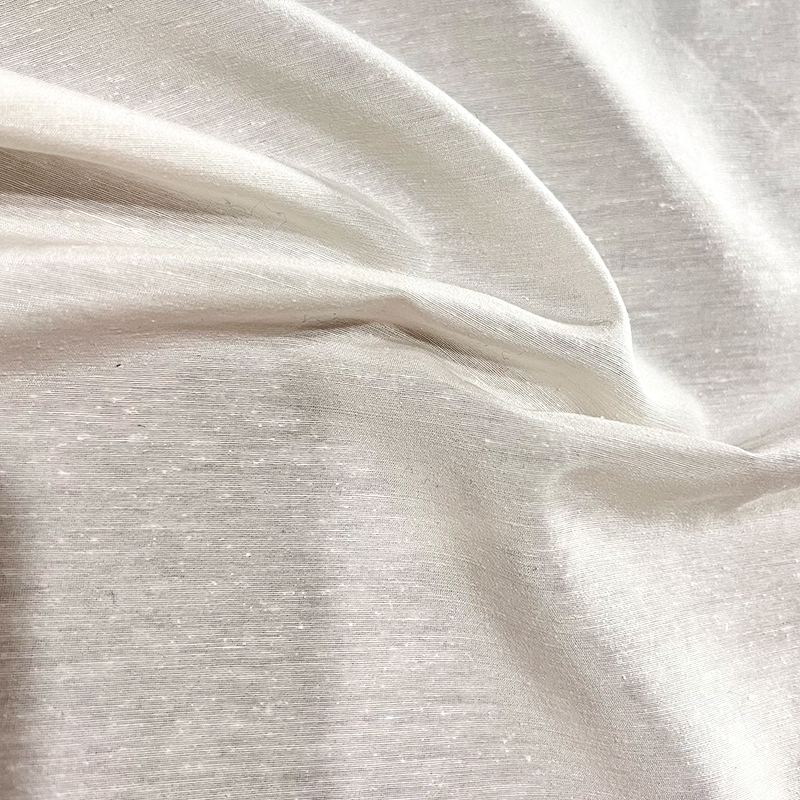
Not all silk is the same, and understanding mulberry silk quality begins with understanding what separates it from every other variety of silk fabric material on the market. Mulberry silk is produced exclusively by the Bombyx mori silkworm, a domesticated species that feeds solely on the leaves of the white mulberry tree. This controlled diet and centuries of selective breeding have resulted in a silkworm that produces filaments of extraordinary consistency — uniformly fine, almost perfectly round in cross-section, and free from the irregular thickening and surface variation that characterize wild silk varieties such as Tussar or Eri. It is this filament uniformity that gives mulberry silk fabric its defining visual qualities: the smooth, high-luster surface, the fluid drape, and the soft, skin-close hand feel that no other silk type can fully replicate.
The geographic origin of mulberry silk production also plays a measurable role in fabric quality. Suzhou, China — historically known as the "Land of Silk" — has been a center of silk culture and weaving skill inheritance for over a thousand years. Manufacturers rooted in this tradition, such as Suzhou Wangu Silk Co., Ltd., founded in 2004 and specializing in R&D, weaving, dyeing, printing, and digital printing of silk, bring both technical knowledge and cultural depth to the production of mulberry silk fabric. For designers and buyers sourcing premium silk fabric material, the combination of raw material quality and production expertise concentrated in regions like Suzhou represents a meaningful quality baseline that regions with shorter silk histories cannot easily replicate.
The Quality Indicators Designers Most Often Overlook
Understanding mulberry silk quality requires looking beyond the surface characteristics that are easiest to evaluate at the sampling stage. Sheen, softness, and drape are the qualities most designers assess first — and while these are genuinely important, they reveal only part of the story. The deeper quality factors that determine how a mulberry silk fabric performs over time, through dyeing, wear, and washing, are less immediately visible but far more consequential for the finished product.
Filament Grade and Denier Consistency
Mulberry silk filaments are graded by the consistency of their diameter and the absence of defects along their length. Higher-grade filaments — typically rated 6A or 5A in Chinese grading standards — are more uniform in denier, producing yarn and eventually fabric with a smoother surface and more predictable dye uptake. Lower-grade filaments introduce micro-variations in diameter that create subtle surface irregularities, uneven luster, and inconsistent color development after dyeing. When evaluating mulberry silk fabric samples, requesting information about the filament grade used in production is a more reliable quality indicator than visual assessment alone, particularly for fabrics intended for high-end fashion or luxury home textile applications.
Degumming Process and Sericin Removal
Raw silk filaments are coated in sericin, a natural protein gum that binds the cocoon together. Degumming — the controlled removal of this sericin — is one of the most technically sensitive steps in silk fabric production. Under-degummed silk retains excess sericin that stiffens the hand feel and interferes with dye penetration, producing uneven color and a harsher texture than properly processed silk. Over-degummed silk loses structural integrity, resulting in fabric that feels soft initially but pills, weakens, or breaks down prematurely after laundering. A properly degummed mulberry silk fabric strikes a precise balance: complete enough to reveal the natural softness and luster of the filament, conservative enough to preserve fiber strength and long-term durability.
Momme Weight and Its Relationship to End Use
Momme (mm) is the traditional unit of weight measurement for silk fabric material, representing the weight in pounds of a standardized silk piece measuring 45 inches wide by 100 yards long. It is one of the most practically important specifications in silk sourcing, yet it is frequently misunderstood. Higher momme does not simply mean higher quality — it means greater fabric density and weight, which translates to different performance characteristics depending on the application. A 12mm mulberry silk charmeuse is appropriate for lightweight scarves and linings. A 19mm or 22mm fabric offers the body and durability needed for structured garments, bedding, and upholstery. Matching momme weight to end use is fundamental to designing a product that performs as intended over its full service life.
How Weave Structure Affects Mulberry Silk Fabric Performance
The weave structure of a mulberry silk fabric determines its surface texture, drape behavior, opacity, and resistance to snagging and abrasion — all factors that materially affect how the fabric performs in use and how long it retains its original appearance. Understanding the major weave types and their specific performance profiles helps designers make more informed sourcing decisions and reduces the risk of fabric-garment performance mismatches.
| Weave Type | Surface Character | Drape | Best Applications |
| Charmeuse (Satin) | High luster front, matte back | Fluid, bias-responsive | Eveningwear, lingerie, scarves |
| Crepe de Chine | Matte, subtle texture | Controlled, structured | Blouses, dresses, tailored garments |
| Habotai (China Silk) | Lightweight, smooth | Soft, flowing | Linings, lightweight scarves, prints |
| Dupioni | Slubbed, textured sheen | Crisp, structured | Suiting, structured dresses, home textiles |
| Jacquard | Woven pattern, dimensional | Moderate, pattern-dependent | Luxury furnishings, couture, accessories |
Dyeing, Printing, and Color Performance in Silk Fabric Material
The dyeing and printing of mulberry silk fabric is a technically demanding process that directly affects color vibrancy, wash fastness, and the long-term visual performance of the finished textile. Silk's natural protein fiber structure accepts acid dyes with exceptional affinity, producing rich, deep colors with a luminous quality that synthetic fibers cannot achieve. However, this same chemical affinity means that dyeing errors — incorrect pH, uneven dye penetration, insufficient fixation time, or incompatible dye-fabric combinations — produce results that are difficult or impossible to correct after the fact.
For sourcing buyers evaluating mulberry silk fabric material from manufacturers, requesting standardized colorfastness test results — specifically wash fastness, rub fastness, and light fastness ratings per ISO or AATCC standards — provides objective data on dye quality that visual inspection cannot replicate. Digital printing on silk, an area of increasing interest for fashion designers seeking complex, high-resolution pattern reproduction, adds further technical requirements: the substrate must be pretreated to accept inkjet dyes without bleeding or feathering, and post-printing fixation must be carefully controlled to achieve both color vibrancy and adequate wash fastness. Manufacturers with in-house digital printing capabilities and the technical staff to manage these process variables consistently — such as those with dedicated R&D functions in Suzhou's silk manufacturing ecosystem — offer a meaningful quality advantage over facilities that outsource these processes.
Sourcing Mulberry Silk Fabric: What to Ask Your Supplier
For designers and brands sourcing mulberry silk fabric at wholesale or custom manufacturing scale, the quality of supplier communication is as important as the quality of the fabric itself. A supplier who can answer technical questions with specificity — and who proactively provides the data needed to make informed sourcing decisions — is demonstrably more reliable than one who responds to quality inquiries with generic assurances. The following checklist covers the most important questions to raise before committing to a mulberry silk fabric supplier:
- What filament grade is used? Request the specific grading standard applied (e.g., Chinese national standard GB/T 1797) and the grade of raw filament used in your fabric specification. Grade 5A or 6A indicates premium raw material quality.
- What is the momme weight and how is it verified? Ask for documented weight testing results rather than nominal specifications. Weight variation beyond ±3% from the stated momme indicates inconsistent production control.
- What dyeing method and dye class is used? Acid dyes with proper fixation are standard for mulberry silk. Reactive dyes may be used for specific effects but require different process parameters. Clarify whether eco-certification (OEKO-TEX, GOTS) applies to the dyes and auxiliaries used.
- What colorfastness ratings does the fabric achieve? Request ISO 105 or equivalent test reports covering wash, rub, and light fastness. A minimum rating of 3-4 on a 1-5 scale is expected for fashion applications; home textile applications typically require ratings of 4 or above.
- What is the minimum order quantity and sampling process? Reliable wholesale mulberry silk fabric suppliers offer structured sampling — pre-production samples for color and hand feel approval, and production samples before full order shipment — as a standard part of their quality management workflow.
- Does the supplier offer custom fabric development? For brands seeking differentiated products, suppliers with in-house R&D and weaving capabilities — as distinct from trading companies that source from third-party mills — can develop custom silk blend fabric constructions, exclusive prints, or proprietary weave structures that cannot be easily copied by competitors.
Why Suzhou Remains the Global Benchmark for Mulberry Silk Quality
The concentration of mulberry silk expertise in Suzhou is not a historical accident — it is the product of centuries of continuous refinement in every stage of silk production, from sericulture and reeling through weaving, dyeing, and finishing. The city's silk weaving tradition has been recognized by UNESCO as intangible cultural heritage, and its manufacturers carry both the technical knowledge and the quality standards embedded in that tradition. For international buyers sourcing mulberry silk fabric for European and American markets — where quality expectations, chemical safety regulations, and sustainability requirements are among the most stringent in the world — Suzhou-based manufacturers with vertically integrated production capabilities represent the most reliable sourcing option available.
The practical implication for designers is straightforward: understanding mulberry silk quality is not just about knowing what to look for in a fabric swatch. It is about building a sourcing relationship with a manufacturer whose production process, quality management systems, and technical capabilities are aligned with the performance requirements of your end product. Fashion, high quality, excellent service, and reasonable price are not competing priorities in well-run silk manufacturing — they are the integrated outcome of production systems that have been refined over decades. Designers who approach silk sourcing with this level of technical seriousness consistently produce better products, experience fewer production problems, and build more durable supplier relationships than those who evaluate mulberry silk fabric on aesthetics alone.
 previous post