中文简体
中文简体 Français
 Deutsch
 italiano
Plant Dyeing Fabric: Natural Colors, Mordants & Solid and Pattern Dyeing
Plant dyeing fabric achieves lasting color through a chemical bridge between natural pigment molecules and textile fibers, a bond that requires a mordant to fix the dye. Without a metal salt intermediary, most plant dyes simply stain the fabric and wash out within a few launderings. The dyestuff comes from specific plant parts: indigo leaves yield blue, madder roots produce red, walnut hulls release brown, and goldenrod flowers give yellow. The final appearance ranges from uniform solid color achieved through immersion dyeing to intricate patterns created by contact printing, bundle wrapping, or resist techniques where the plant material itself shapes the design. For a textile designer or conscious brand, plant dyeing offers a color palette that synthetic dyes cannot replicate: these natural hues shift subtly under different light sources and mellow gracefully with age rather than fading to an artificial-looking pastel.
Content
- 1 The Mordant Bridge: How Color Bonds to Fiber
- 2 Dye Extraction from Plant Sources
- 3 Solid-Color Dyeing Through Immersion
- 4 Pattern Dyeing with Plant Materials
- 5 Fiber Selection and Its Impact on Dye Uptake
- 6 Lightfastness and Wash-Fastness of Plant-Dyed Textiles
- 7 Environmental Profile of Plant Dyeing
- 8 Integrating Plant Dyeing into a Production Workflow
The Mordant Bridge: How Color Bonds to Fiber
The fundamental challenge of plant dyeing is that most natural dye molecules are not chemically attracted to cellulose or protein fibers in their raw state. A mordant, typically a water-soluble metal salt, forms an insoluble coordination complex that traps the dye molecule between the metal ion and the fiber's functional groups. Aluminum potassium sulfate, known as alum, is the most widely used mordant for its low toxicity and its ability to produce bright, clear shades. Iron ferrous sulfate saddens and darkens colors, shifting a madder red toward aubergine or a tannin brown toward charcoal. Copper sulfate pushes hues toward green-blue. The mordanting step can be performed before dyeing, simultaneously with dyeing in a single bath, or after dyeing to shift the final shade. Pre-mordanting with alum at 10% to 15% weight of fiber followed by a 60-minute simmer at 85°C to 90°C establishes a uniform receptor layer that ensures the subsequent dye bath exhausts evenly across the fabric surface, preventing the blotchy uptake that mars poorly prepared cloth.
Mordant Selection and Its Effect on Final Color
The same dyestuff can produce a spectrum of distinct colors depending solely on the mordant choice. A madder root bath on wool mordanted with alum yields a rich brick red. The identical dye bath on wool mordanted with iron produces a deep plum-brown. On cotton pre-treated with tannin and then alum, the red shifts toward a softer coral. This mordant-dependent color variation is a design tool, not a defect. A skilled dyer maintains a library of mordant-dye combination swatches and uses them to plan a collection where all colors derive from a single dye plant but read as entirely different hues to the eye. For solid-color production, mordanting consistency across the entire fabric bolt is the process control metric that separates professional plant-dyed textiles from craft-level variability.
Dye Extraction from Plant Sources
The dyestuff within plant material is locked inside cell walls and must be released into water before it can transfer to fabric. Extraction methods vary by the plant part and the dye chemistry involved. Tannin-rich barks, roots, and hulls require prolonged simmering at 90°C to 100°C for 60 to 120 minutes. Delicate flavonoid pigments in flowers and leaves degrade at high temperatures, so a gentle steep at 60°C to 70°C for 45 minutes preserves their chromophores. Indigo requires an entirely different pathway: the leaves contain indican, a precursor that must be fermented in an alkaline reduction vat where bacteria strip oxygen from the molecule, converting it to the water-soluble leuco-indigo form that penetrates the fiber. When the fabric is lifted from the vat and exposed to air, oxidation reforms the insoluble blue pigment inside the fiber structure, locking it in place without a mordant. This unique vat-dyeing mechanism is why indigo is the only plant dye that achieves deep, wash-fast shades on unmordanted cotton.
| Plant Source | Part Used | Mordant | Color on Wool/Silk |
|---|---|---|---|
| Madder (Rubia tinctorum) | Root | Alum | Brick red to coral |
| Weld (Reseda luteola) | Leaves/Stems | Alum | Brilliant lemon yellow |
| Walnut (Juglans spp.) | Hulls | None (substantive) | Warm dark brown |
| Indigo (Indigofera spp.) | Leaves | None (vat process) | Deep blue |
| Logwood (Haematoxylum) | Heartwood | Iron | Deep violet-black |
Solid-Color Dyeing Through Immersion
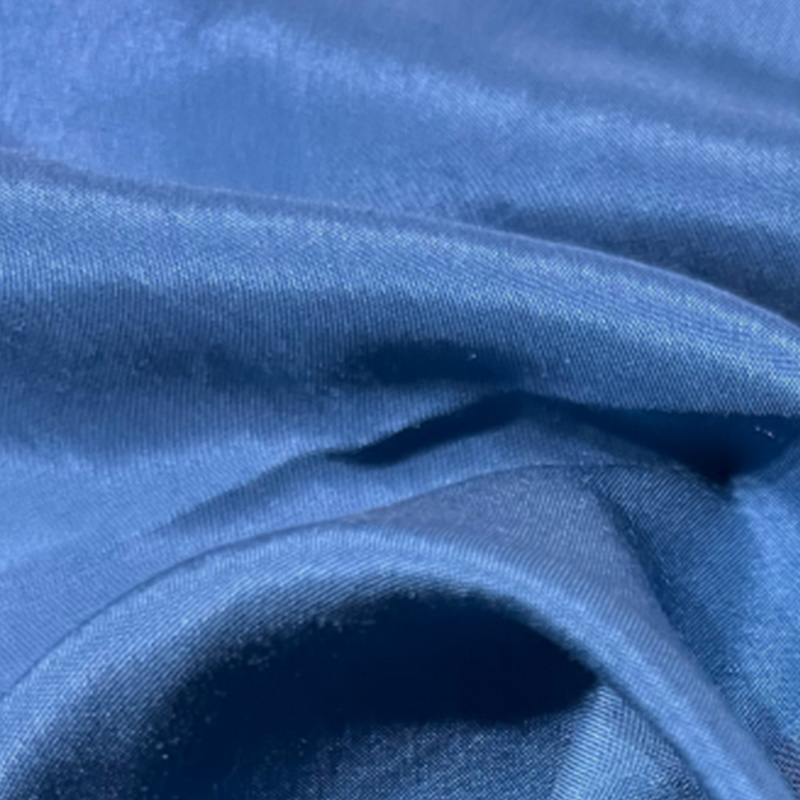
Achieving a perfectly even solid color with plant dyes demands a level of process control that surpasses synthetic dyeing, because natural dye baths are particulate suspensions, not true solutions. The fabric must be scoured to remove all sizing, oils, and waxes before mordanting. Any residual contamination creates a resist effect, blocking dye uptake in patches. The dye bath must be strained through a fine mesh to remove plant fragments that would otherwise lodge in the fabric and create concentrated spots of color. During the dyeing cycle, the fabric must be lifted, unfolded, and re-immersed at regular intervals, typically every 5 to 10 minutes, to prevent dye from settling in the folds. The bath temperature is maintained within a ±3°C band for the duration, which may extend from 60 minutes for pale shades to several hours for deep, saturated tones. After dyeing, the fabric cools slowly in the exhausted bath overnight; this extended contact allows the maximum uptake of residual dye molecules and noticeably deepens the final shade compared to fabric removed hot and rinsed immediately.
Controlling Shade Depth and Reproducibility
Shade depth in immersion plant dyeing is controlled by the ratio of dyestuff weight to fiber weight, expressed as a percentage. A pale madder pink on wool requires 10% to 20% weight of fiber of dried madder root. A deep, saturated red demands 50% to 100%. This ratio, combined with the mordant concentration and the duration of the dye cycle, forms a three-variable system that determines the color output. Reproducing a shade across multiple dye lots requires recording these parameters and using dyestuff from the same harvest batch, because the pigment concentration in plant material varies with growing conditions, soil mineral content, and the age of the dried material. A professional plant-dyeing operation builds a shade library of physical swatches keyed to batch-specific dyestuff reserves, dyeing a test swatch before committing a full production bolt to the bath.
Pattern Dyeing with Plant Materials
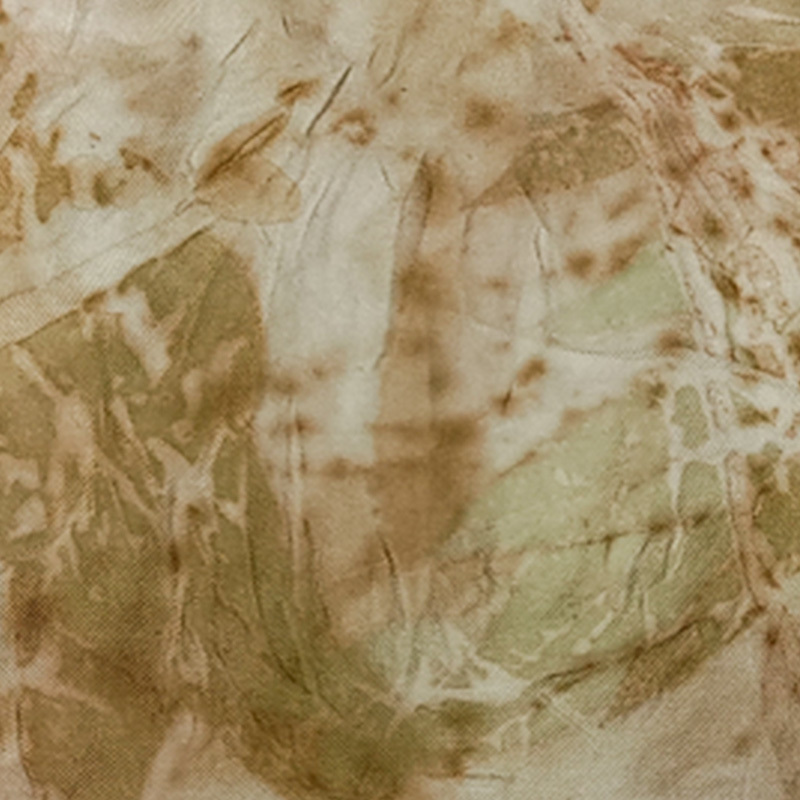
Pattern creation using plant dyes exploits the fact that the dye molecules transfer from the plant tissue directly to the fabric under the right conditions of moisture, heat, and pressure. Unlike immersion dyeing where the plant is extracted into a bath, pattern techniques bring the whole or crushed plant material into direct physical contact with the cloth. The plant's shape, vein structure, and pigment distribution imprint onto the fabric as a botanical shadow or a vivid color transfer, depending on the technique. This approach bridges dyeing and printing, producing results that no screen or digital printer can replicate because the color gradient follows the organic contours of the leaf or petal that created it.
Bundle Dyeing and Eco-Printing
Bundle dyeing arranges fresh or soaked leaves, flowers, and bark pieces directly on mordanted fabric, which is then tightly rolled around a stick or pipe and bound with string under tension. The bundle is steamed for 60 to 90 minutes or simmered in a water bath. Inside the bundle, the plant material presses against the fabric, and the combination of heat, moisture, and the acidic or tannic chemistry of the plant juices transfers pigment into the fiber. Unrolling the bundle reveals leaf silhouettes, petal stains, and color halos where plant juices wicked into the fabric. The results are inherently unrepeatable in exact detail, which is the technique's artistic value. Eucalyptus, rose leaves, onion skins, and marigold petals are reliable contributors because their pigment load is high and their shapes hold definition under the bundle pressure. The fabric must be mordanted with alum before bundling to fix the transferred color; without a mordant, the leaf prints fade to faint ghost marks after washing.
Resist Techniques and Block Printing
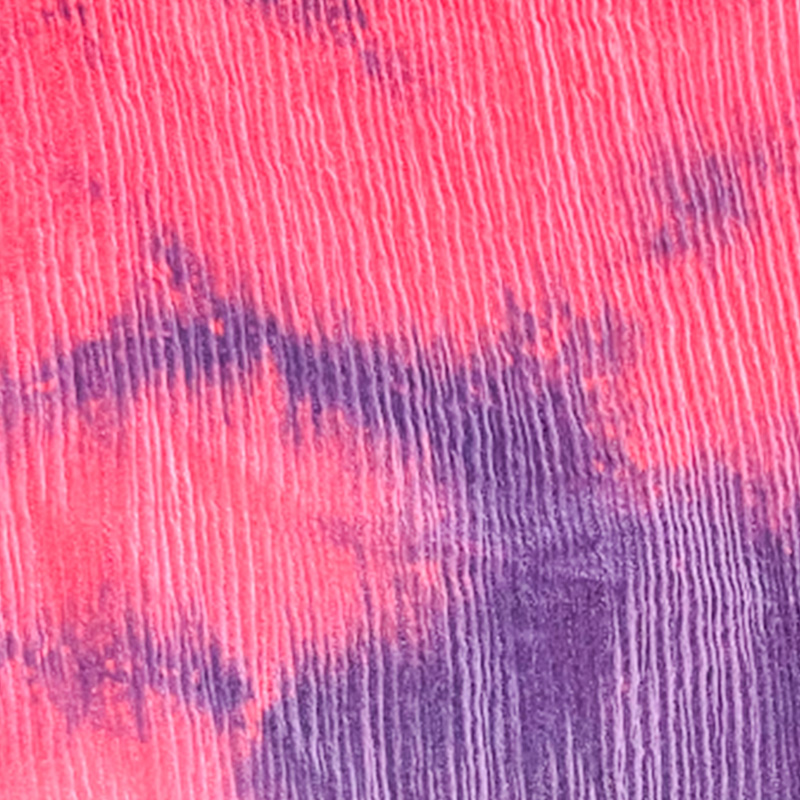
Plant dye pastes can be thickened with gum arabic or sodium alginate and applied through wooden blocks, stencils, or hand-painting to create repeat patterns on fabric. The dye paste is printed onto mordanted cloth, then the fabric is steamed to set the color. Resist techniques use wax, paste, or tied resists to block the dye from reaching certain areas. A fabric tied in tight knots and submerged in an indigo vat emerges with a radiating starburst pattern where the dye penetrated only the exposed folds. These resist methods adapt the solid-color immersion process into a patterning tool without requiring any equipment beyond string, clamps, or wax. The aesthetic range spans the precise geometric repeats of block-printed madder to the chaotic, one-off tie-dye effects that define the individual character of handcrafted plant-dyed textiles.
Fiber Selection and Its Impact on Dye Uptake
Plant dyes bond most readily to protein fibers. Wool and silk contain amino acid side chains with carboxyl and amine groups that form strong coordination bonds with mordant metal ions. A wool fabric can absorb 80% to 95% of the colorant from a well-prepared dye bath. Cotton and linen, composed of cellulose, lack these reactive groups and must be pre-treated with a tannin step to create a bonding layer before the mordant can attach. The tannin, often extracted from oak galls or myrobalan, polymerizes on the cellulose surface and provides phenolic hydroxyl groups that the metal mordant can bridge to. Even with this treatment, cellulose fibers rarely exceed 60% to 75% dye uptake, and the resulting colors are lighter and softer than on protein fibers. This fiber-dependent color depth is not a shortcoming; it is a material property that a designer uses intentionally, pairing the same dye with wool for the saturated main fabric and with cotton for the lining to create a tonal contrast within a single garment.
Lightfastness and Wash-Fastness of Plant-Dyed Textiles
The durability of plant-dyed color is measured by two standards: lightfastness, the resistance to fading under UV exposure, and wash-fastness, the resistance to color loss during laundering. Plant dyes, as a class, have lower lightfastness ratings than synthetic dyes, typically scoring 4 to 6 on the Blue Wool Scale where 8 is maximum lightfastness. Indigo and tannin-based browns are relatively light-stable, while most flower-derived yellows and pinks fade noticeably after 40 to 80 hours of direct sunlight exposure. Wash-fastness improves dramatically with proper mordanting and post-dye curing. A plant-dyed fabric that has been heated to 60°C for 30 minutes after dyeing, then rinsed until the water runs clear, should lose no more than 5% to 10% of its color depth over ten gentle wash cycles. The consumer must be educated that plant-dyed garments require pH-neutral soap and cold-water washing, because alkaline detergents strip the mordant-dye complex. This care requirement is part of the product's value proposition, not a defect: the garment evolves in color over its lifetime, acquiring a patina that synthetic dyes cannot reproduce.
Environmental Profile of Plant Dyeing
Plant dyeing is environmentally friendly at its core because the dye source is renewable plant biomass, not petrochemical-derived synthetic precursors. The spent dye bath, composed of exhausted plant matter and residual mordant metals, can be disposed of through composting when mordants are limited to alum and iron, both of which are soil-compatible at low concentrations. Copper and chrome mordants, however, require wastewater treatment because these heavy metals are phytotoxic and accumulate in soil. A genuinely eco-responsible plant dyeing operation avoids chrome entirely and limits copper to accent use where the aesthetic payoff justifies the additional effluent management. The plant material itself, after dye extraction, becomes a nitrogen-rich compost additive, closing the material loop from soil to dye pot and back to soil. This circularity distinguishes plant dyeing from the linear take-make-dispose model of synthetic dye manufacturing, where spent dyestuff, unfixed colorant, and salt-laden effluent discharge into waterways with well-documented ecological harm.
Integrating Plant Dyeing into a Production Workflow
Scaling plant dyeing from a craft practice to a production textile process requires standardizing the variables that make hand dyeing unique. The dyestuff must be sourced from a consistent supplier who can document the harvest year, plant species, and drying method. The water used for the dye bath must be tested for pH and mineral content; hard water with high calcium content dulls colors and precipitates mordants, so a water-softening step or the use of collected rainwater may be necessary to maintain shade consistency. The fabric must be scoured and mordanted in lots matched to the dye bath capacity, and each lot must be documented with a process sheet recording the mordant concentration, dyestuff ratio, bath temperature profile, and cycle time. Without this documentation, plant dyeing reverts to an unreproducible art form. With it, a production studio can supply a fashion brand with plant-dyed fabric that matches the approved lab dip within commercially acceptable tolerance, batch after batch, season after season.
 previous post