中文简体
中文简体 Français
 Deutsch
 italiano
Tie Dye Silk & Crinkle Fabric: Complete Guide
Content
- 1 Why Tie Dye Silk Stands Apart from Other Dyed Fabrics
- 2 The Hand Technique Behind Every Tie Dye Pattern
- 3 The Distinctive Character of Crinkle Tie Dye Fabric
- 4 Blended Functional Fabrics in Tie Dye Applications
- 5 Suzhou's Weaving Heritage and Its Impact on Tie Dye Quality
- 6 Selecting and Specifying Tie Dye Silk for Fashion and Interior Use
Why Tie Dye Silk Stands Apart from Other Dyed Fabrics
Among all the fabrics used in tie dyeing, tie dye silk occupies a position that no other material can quite replicate. Silk's naturally smooth, protein-based fiber structure gives it an unparalleled affinity for dye absorption, allowing colors to penetrate deeply and evenly into each strand. The result is a vibrancy and luminosity that cotton, rayon, and blended synthetics simply cannot match — the dye appears to glow from within the fabric rather than sitting on the surface. For fashion designers, textile buyers, and creative studios sourcing premium tie dye fabrics for European and American markets, this depth of color is a defining quality criterion that begins at the fiber level.
Silk's fine filament diameter also plays a critical role in how tie dye patterns develop during the dyeing process. Because the individual fibers are so slender, color gradients transition with exceptional softness — there are no harsh edges between shades, no streaky transitions, and no patchiness in the dyed areas. Instead, tie dye silk produces the kind of fluid, organic color movement that fabric printing technologies attempt to replicate digitally but can never fully achieve. The handmade, inherently unpredictable nature of each dyed piece is precisely what gives this material its value in fashion and interior textiles.
The Hand Technique Behind Every Tie Dye Pattern
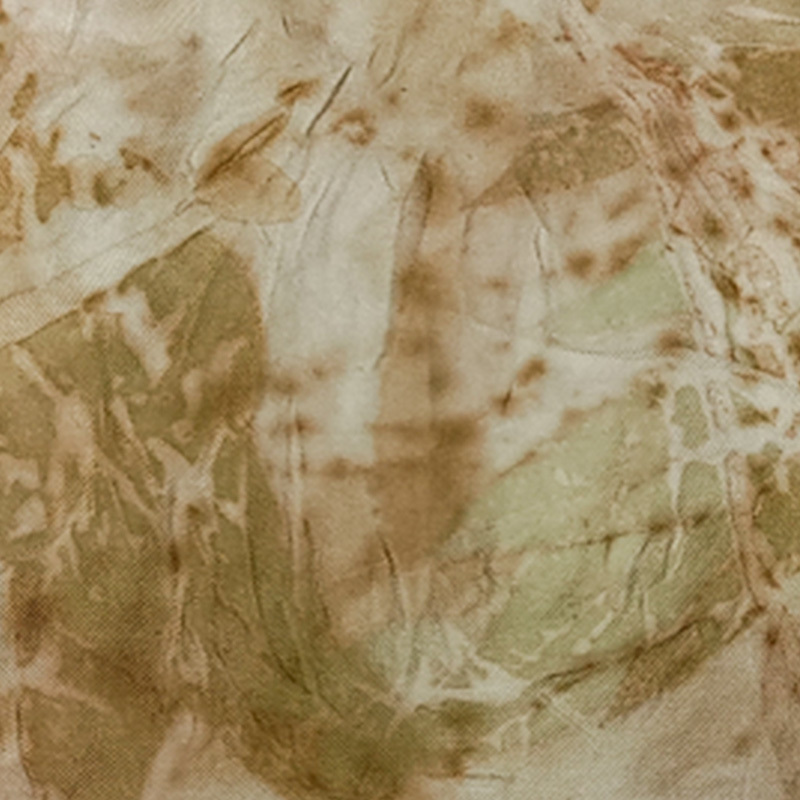
Tie dyeing, at its core, is a resist-dyeing technique — sections of fabric are physically bound, twisted, or knotted before immersion in dye, and those bound areas resist color penetration while the exposed areas absorb it. When the bindings are removed after dyeing, the contrast between dyed and undyed (or differently dyed) zones creates the characteristic tie dye pattern. This process is entirely driven by the craftsperson's hands: the way fabric is folded, the tightness of the binding, the duration of immersion, and the sequence of dye colors applied are all decisions made in real time, by touch and experience, rather than by machine settings or digital parameters.
This hand technology is what gives every piece of tie dye silk its irreproducible character. No two pieces produced through hand tie dyeing will ever be identical, even when made by the same artisan using the same colors. The slight variations in folding angle, binding pressure, and dye saturation mean that each length of fabric carries its own unique tie dye pattern — a quality that mass-produced digital printing cannot offer, and one that sophisticated buyers in fashion markets actively seek out. The "free style and irregular" aesthetic of hand tie dyeing is not a limitation of the process; it is the feature that defines its commercial appeal.
Common hand tie dye pattern types applied to silk include:
- Spiral patterns: Fabric is twisted from a central point and bound in segments, creating radiating color arms that fan outward from the twist center. On silk, the fine fibers cause color to bleed softly along each arm, producing a more delicate effect than the same pattern on cotton.
- Scrunch or crumple patterns: Fabric is gathered randomly and compressed before binding, creating an all-over irregular pattern with no defined focal point. This technique pairs naturally with the crinkle surface texture that develops in silk during the tying process.
- Shibori-inspired fold patterns: Precise accordion or diagonal folds are bound at intervals, creating geometric repeat patterns that sit in contrast to the organic nature of the dye application. Silk's drape allows the folds to be tighter and more precise than heavier fabrics, resulting in sharper geometric definition.
- Gradient wash patterns: Fabric is partially immersed in dye baths of varying concentrations, allowing color to fade gradually from saturated to pale across the length or width of the fabric. Silk's dye absorption rate produces exceptionally smooth gradients through this method.
The Distinctive Character of Crinkle Tie Dye Fabric
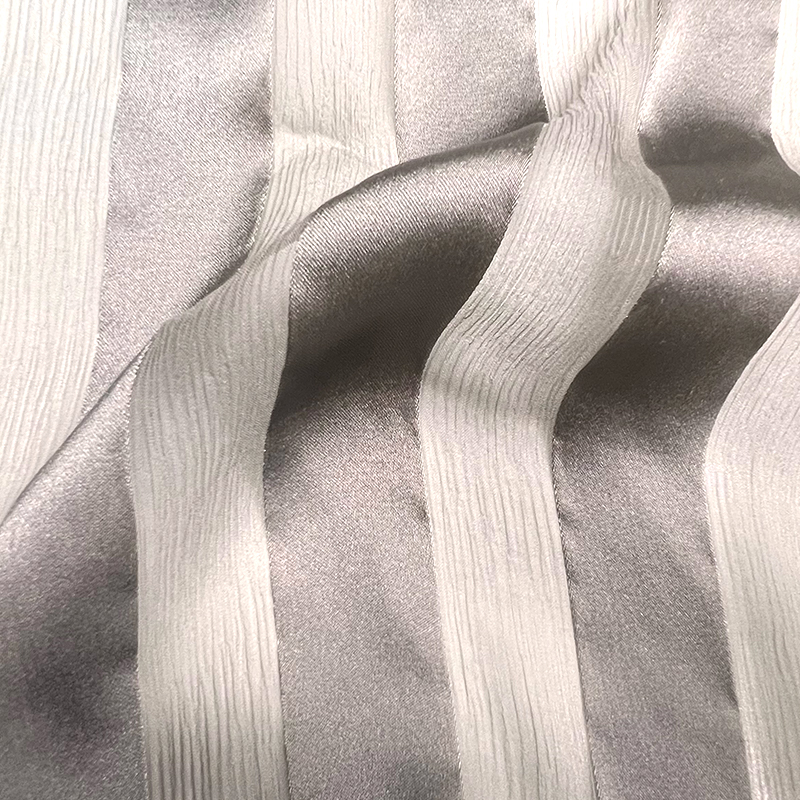
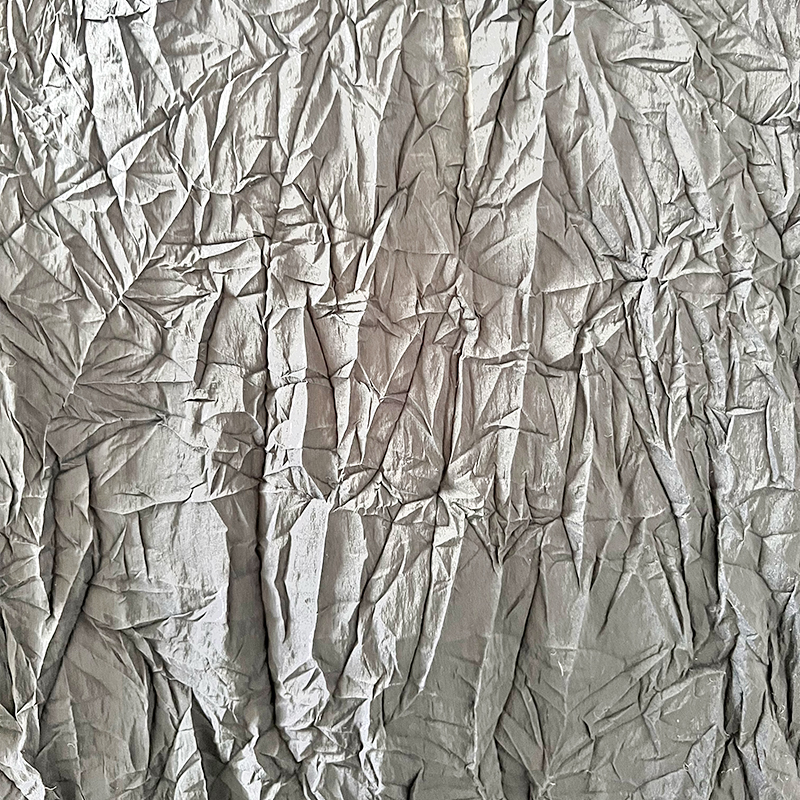
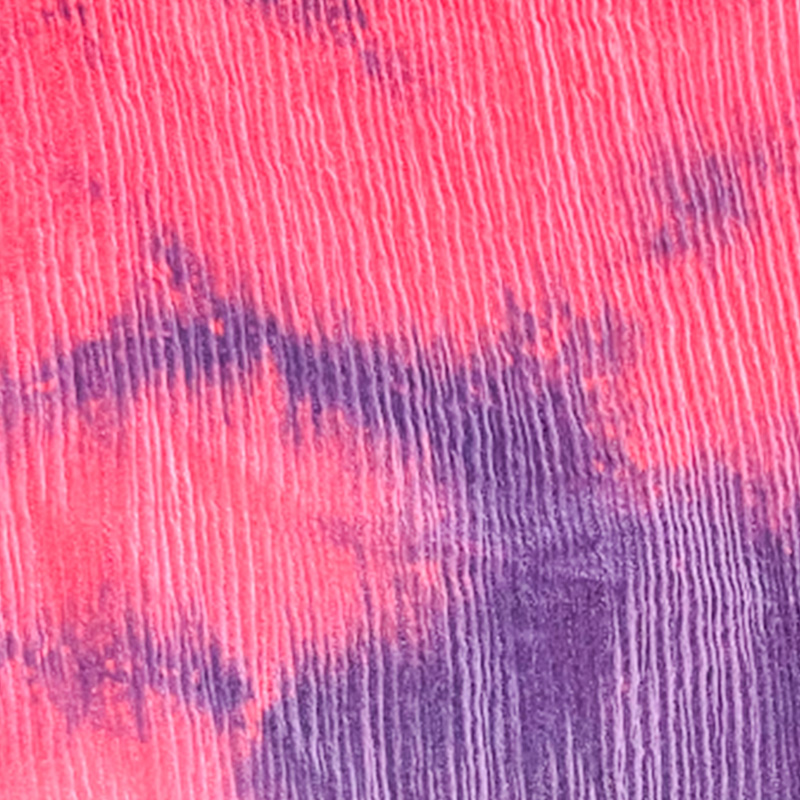
One of the most valued surface characteristics of hand-dyed silk is the subtle dimensional texture that develops during the tie dyeing process itself. When silk is tightly twisted, bunched, or bound before dyeing, the mechanical stress imposed on the fiber structure creates slight deformations in the weave — areas where the fabric has been compressed and released leave behind a gentle crepe and crinkle effect that persists even after the binding is removed and the fabric is dried. This is crinkle tie dye fabric: a textile that combines color pattern with surface texture in a single process, without requiring any separate embossing, creping treatment, or chemical finishing step.
The crinkle effect in silk behaves differently from manufactured creping in synthetic fabrics. Because it arises from the natural distortion of the fiber during dyeing rather than from a chemical or heat-setting process, it has an organic, irregular quality — the texture is not uniformly distributed across the fabric surface, but appears more pronounced in areas that were more tightly bound and fades to a smoother surface in areas that received less compression. This textural variation corresponds directly with the tie dye pattern, meaning the color design and the surface texture are inherently connected and mutually reinforcing — an aesthetic coherence that gives crinkle tie dye fabric a distinctive sensory richness that flat-dyed fabrics cannot achieve.
In fashion applications, the crinkle surface serves practical as well as aesthetic purposes. The slight surface relief reduces the tendency of silk to cling, improves airflow against the skin, and creates visual depth that shifts as the fabric moves — a quality particularly valued in scarves, blouses, dresses, and lightweight outerwear where the interplay of light and texture is central to the garment's appeal.
Blended Functional Fabrics in Tie Dye Applications
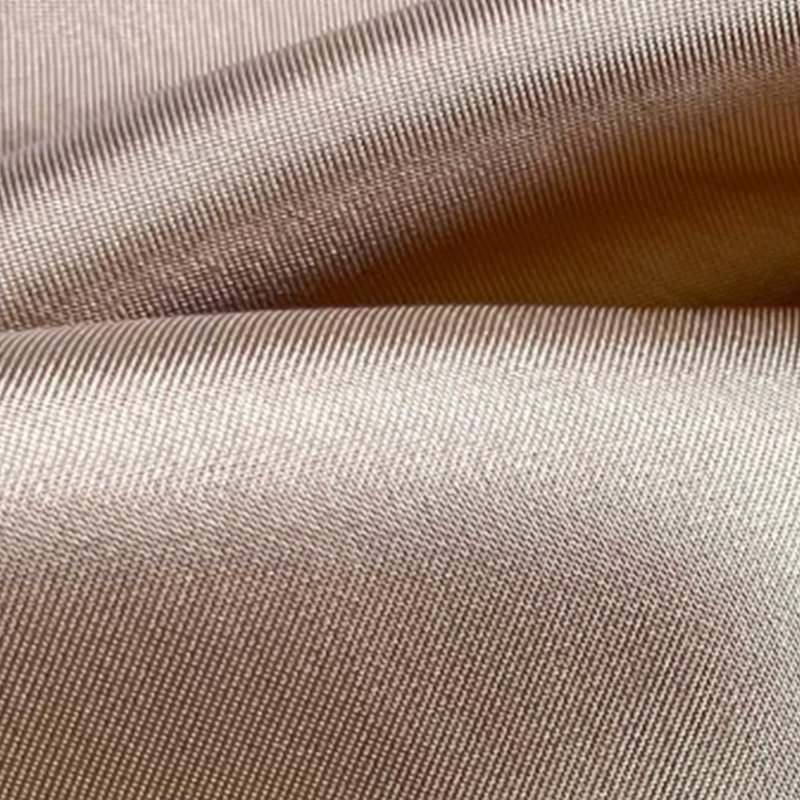
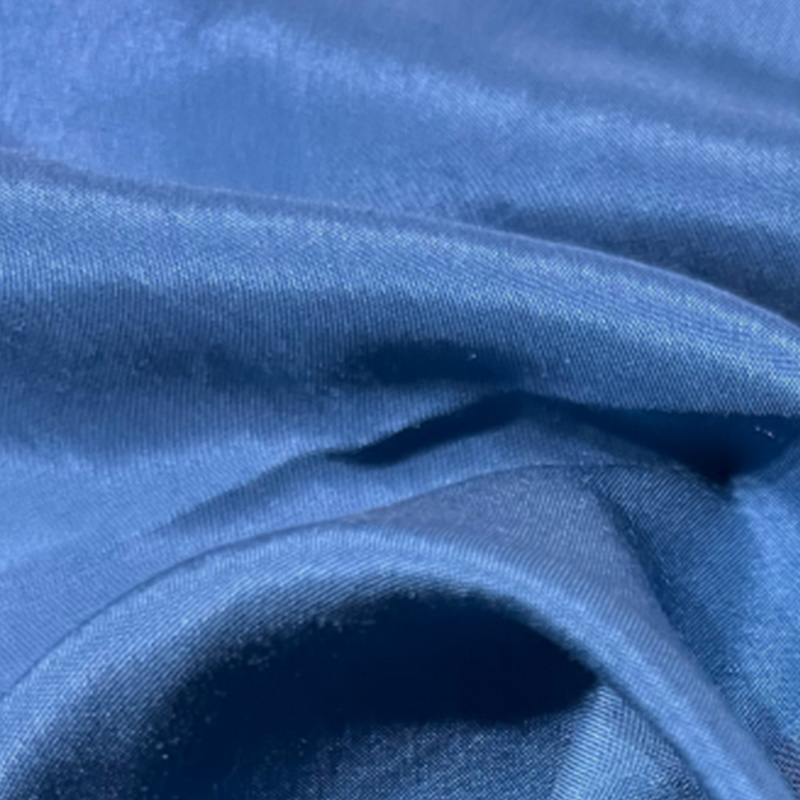
While pure silk tie dye represents the premium end of the market, blended functional fabrics have opened up the tie dye technique to a broader range of product applications and price points. A blended functional fabric combines two or more fiber types — typically silk with cotton, modal, viscose, or synthetic fibers — to achieve a specific balance of performance properties that pure silk alone may not deliver. In tie dye applications, the fiber blend directly affects how the dye is absorbed, how the tie dye pattern develops, and what surface texture results from the binding process.
The following table compares how different fiber compositions behave in tie dye processing:
| Fabric Composition | Dye Absorption | Pattern Definition | Crinkle Effect |
| 100% Silk | Excellent | Soft, fluid edges | Natural, organic |
| Silk / Cotton Blend | Very Good | Slightly more defined | Moderate |
| Silk / Modal Blend | Excellent | Fluid, similar to pure silk | Good |
| Silk / Polyester Blend | Moderate | Uneven between fiber types | Reduced |
| Functional Blended (stretch/moisture) | Variable | Depends on natural fiber content | Low to moderate |
For manufacturers and buyers specifying blended functional fabrics for tie dye end uses, the guiding principle is to maximize natural fiber content — particularly silk or modal — in the blend to preserve dye uptake quality and crinkle texture development. Blends with higher synthetic content reduce both the vibrancy of the tie dye pattern and the natural crinkle formation during processing, delivering a more uniform but less visually dynamic result.
Suzhou's Weaving Heritage and Its Impact on Tie Dye Quality
The quality of a tie dye silk fabric begins long before the dye is applied — it begins with the quality of the base fabric itself. Suzhou, historically known as the "Land of Silk" in China, has sustained an unbroken tradition of silk weaving that spans over two thousand years. This cultural inheritance is not merely decorative history; it translates into practical, demonstrable advantages in the silk textiles produced there. Suzhou-based silk manufacturers benefit from accumulated expertise in yarn selection, loom calibration, weave structure design, and finishing — all of which directly influence how a base fabric will perform in tie dyeing.
A tightly and evenly woven silk base fabric takes tie dye more predictably than one with irregular weave density or inconsistent yarn twist. The weave structure also determines how the fabric responds to the mechanical stress of binding — a well-constructed silk weave develops a clean, recoverable crinkle effect rather than permanent distortion or fiber damage. For buyers sourcing tie dye silk for fashion collections or specialty textile programs, the provenance and construction quality of the base fabric is therefore as important a specification criterion as the dye process itself. Sourcing from established Suzhou manufacturers with deep R&D capability in weaving, dyeing, and digital printing ensures that both the base fabric quality and the tie dye execution meet the standards demanded by European and American fashion markets.
Selecting and Specifying Tie Dye Silk for Fashion and Interior Use
When sourcing tie dye silk or crinkle tie dye fabric for specific end uses, buyers should evaluate several key factors to ensure the fabric meets both aesthetic and functional requirements:
- Base fabric weight: Lighter-weight silk (6–12 momme) produces more delicate crinkle effects and more translucent color, suited to scarves, linings, and sheer garments. Medium-weight silk (14–22 momme) holds stronger crinkle texture and more saturated color, making it appropriate for blouses, dresses, and home textiles.
- Colorway and pattern specification: Because each piece of hand tie dye silk is unique, wholesale buyers should work with manufacturers to define acceptable color range boundaries and pattern type — spiral, scrunch, gradient — rather than expecting exact repeatability. Specifying a colorway family and pattern direction gives artisans the creative latitude required by the process while maintaining brand coherence.
- Crinkle intensity: Discuss with the manufacturer the desired level of crinkle effect — from a barely perceptible surface softness to a pronounced texture — as this can be partially controlled by adjusting binding tightness and fabric weight in the production process.
- Colorfastness standards: For fashion and home textiles entering European and American markets, verify that the dyes used meet applicable colorfastness standards for washing, light exposure, and rubbing, and request test reports to support import compliance documentation.
Tie dye silk — in its pure form or as part of a blended functional fabric program — represents one of the most distinctive and commercially differentiated textile propositions available in today's market. The combination of artisan hand technique, natural fiber quality, organic tie dye pattern development, and the inherent surface character of crinkle tie dye fabric produces a product that balances fashion appeal, tactile richness, and manufacturing authenticity in a way that no print or synthetic alternative can replicate.
 previous post