中文简体
中文简体 Français
 Deutsch
 italiano
Recycled Fabric Clothes: From Waste to Wearable
Content
- 1 The Tangible Environmental Impact of Choosing Recycled Fabric Garments
- 2 The Feedstock: Where Recycled Raw Material Originates
- 3 The Conversion Process: From Waste to Woven Fabric
- 4 GRS and RCS Certification: Verifying the Claim
- 5 The Performance and Aesthetic Profile of Recycled Fabrics
- 6 Garment End-of-Life and Circularity Design
The Tangible Environmental Impact of Choosing Recycled Fabric Garments
A garment cut from recycled fabric directly diverts waste from landfill and incineration back into the textile supply chain. The input material is not virgin polyester or virgin cotton, but post-consumer plastic bottles, discarded fishing nets, and pre-consumer cutting-room scraps that would otherwise become pollution. A single recycled polyester jacket can repurpose approximately 25 to 30 one-litre PET bottles. The immediate environmental gain is quantifiable: producing recycled polyester fiber consumes 59% less energy and reduces CO2 emissions by 32% compared to virgin polyester synthesis from petroleum. Choosing a garment with a verifiable GRS or RCS certification label is a direct purchase of a documented chain of custody, ensuring the recycled content claim is audited from the collection yard through to the finished stitch.
The Feedstock: Where Recycled Raw Material Originates
The term "recycled fabric" does not reference a single input stream. It is an umbrella covering distinct waste sources, each with its own processing pathway and fiber properties. Understanding the feedstock is critical to evaluating the performance and true sustainability of the final cloth.
Post-Consumer PET Bottles and Ocean-Bound Plastic
The most established stream is clear PET beverage bottles. The bottles are collected, sorted, and stripped of labels and caps, then hot-washed to remove adhesives and residual contents. The clean PET flake is melted and extruded into filament yarn or staple fiber. The resulting recycled polyester is chemically identical to virgin polyester, with a tenacity of 3.5 to 4.5 cN/dtex, making it suitable for high-performance activewear, fleece jackets, and durable outerwear. A specialized subset is ocean-bound plastic, certified by organizations ensuring the plastic is collected within 50 km of coastlines in regions lacking formal waste management infrastructure.
Post-Industrial and Post-Consumer Textile Waste
This stream splits into two categories. Pre-consumer cutting scraps from garment factories are clean, fiber-known, and dye-lot traceable, making them the highest-quality recycled input. They are mechanically shredded back into fiber, producing recycled cotton with a slightly shorter staple length than the original. Post-consumer garments are far more complex: they contain trims, multiple fiber blends, dyes, and finishes, all of which must be separated. Mechanical recycling of cotton from post-consumer garments typically yields a fiber with a staple length reduced to 10-15 mm, compared to 25-30 mm for virgin cotton. This reduction limits the percentage of post-consumer recycled cotton that can be blended into a strong ring-spun yarn, often capping at 20-30% before virgin fiber must be added to maintain yarn integrity.
The Conversion Process: From Waste to Woven Fabric
The production of a finished recycled fabric ready for garment cutting is a multi-stage industrial sequence. Each step has a measurable environmental and quality impact. The following table maps the process from raw waste to certified fabric for the two dominant recycled fiber types.
| Process Stage | Recycled Polyester (rPET) | Recycled Cotton |
|---|---|---|
| Collection & Sorting | Optical color sorting; removal of PVC contaminants | Fiber type identification; trim and hardware removal |
| Cleaning | Caustic hot wash; friction separation of labels | De-dusting; optional stripping of reactive dyes |
| Fiber Production | Melt extrusion and spinning into filament or staple | Mechanical shredding; fiber carding and parallelizing |
| Yarn Spinning | Standard FDY/DTY texturing for fabric hand feel | Blended with virgin cotton or viscose for strength |
| Fabric Formation | Knitting or weaving; piece-dyeing with eco-certified dyestuffs | Knitting or weaving; often used in undyed, flecked melange |
GRS and RCS Certification: Verifying the Claim
The label on a garment stating "made from recycled materials" is a marketing claim that requires independent verification to hold weight. This is the function of the Global Recycled Standard (GRS) and the Recycled Claim Standard (RCS). GRS is the more comprehensive standard: it certifies the recycled content percentage, verifies the chain of custody from the recycler to the final garment manufacturer, and imposes additional environmental and social criteria including restrictions on hazardous chemicals and requirements for wastewater treatment. RCS is solely a chain-of-custody standard that tracks recycled material through the supply chain. A garment carrying a GRS certification label with the claim "100% recycled" has been audited by a third-party certification body at every stage of production.
Reading a GRS Transaction Certificate
For procurement and brand compliance teams, the transaction certificate (TC) is the auditable document that proves the fabric's recycled content. A valid TC lists the certified seller, the buyer, the product description, the percentage of recycled content by weight, and a unique certificate number that can be verified on the certifier's database. This prevents the common practice of "greenwashing" where a fabric containing 5% recycled fiber is marketed as recycled. A genuine GRS-certified fabric for apparel will typically specify an exact recycled content, such as "GRS Certified, 100% Post-Consumer Recycled Polyester", which is a legally enforceable declaration under the certification scheme.
The Performance and Aesthetic Profile of Recycled Fabrics
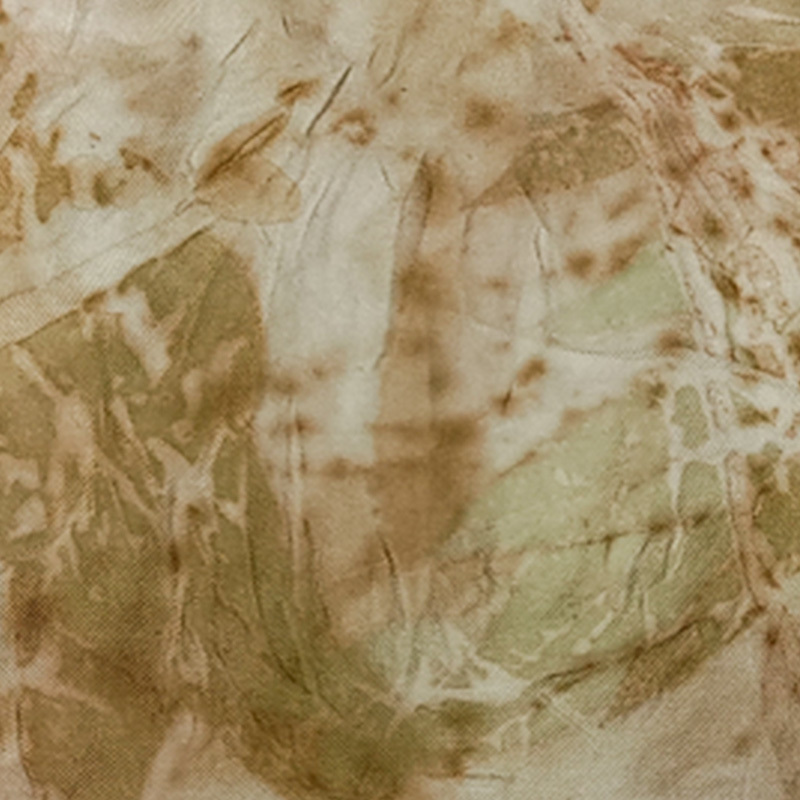
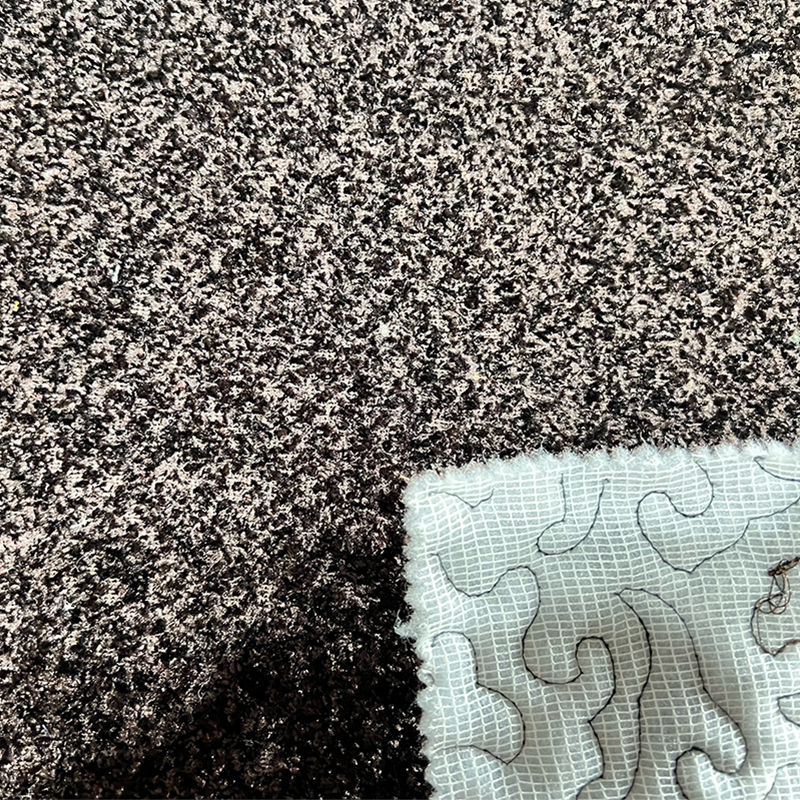
The assumption that recycled fabrics are inherently inferior to virgin materials is contradicted by their growing adoption in technical apparel. Recycled polyester filament is chemically identical to virgin polyester; a 50-denier recycled polyester yarn has the same tensile strength, elongation at break, and dye affinity as its virgin equivalent. Recycled nylon from discarded fishing nets, branded as ECONYL, is a direct substitute for virgin nylon 6 in swimwear and outerwear. The areas where recycled fabrics can differ from virgin benchmarks are in the hand feel of recycled cotton, which is often softer due to the mechanical shredding process micro-fibrillating the fiber surface, and in the visual character of undyed recycled fabrics, which carry a natural, heathered melange appearance derived from the color mixture of the input waste materials. This aesthetic has become a desirable design feature in its own right.
Garment End-of-Life and Circularity Design
A garment made from recycled fabric is not automatically recyclable at its own end of life. This is a critical distinction. A recycled polyester jacket blended with elastane, assembled with polyester sewing thread, and fitted with a metal zipper and plastic buttons is a mixed-material product that will not be accepted by a mechanical textile recycling stream without disassembly. True circularity design for recycled fabric clothes requires mono-material construction: a 100% recycled polyester shell, recycled polyester sewing thread, and polyester zipper tape, all heat-sealed labels printed directly on the fabric, and a design that allows the entire garment to be shredded and re-pelletized as a single polymer stream. A brand designing for circularity will specify that the garment can be returned at end-of-life and chemically recycled back to its monomer, fully closing the loop from waste to wearable and back to raw material.
 previous post