中文简体
中文简体 Français
 Deutsch
 italiano
Reversible Bonded Fabric: The Lining-Free Solution for Outerwear & Blazers
Most garments need a lining because they have a wrong side—a raw, unfinished interior that needs to be concealed. Reversible bonded fabric solves this problem at the material level, before a single pattern piece is cut. By fusing two fabric layers into one composite textile with two clean, usable faces, it removes the lining from the equation entirely.
For designers producing blazers, structured jackets, and outerwear, this changes the construction logic from the ground up: fewer components, cleaner finishes, and a garment that can genuinely be worn on either side.
Content
What Makes a Fabric Truly Reversible
A reversible fabric has two finished, presentable faces. Turn it over, and both sides are equally complete—no exposed yarn floats, no structural irregularities, no surface that was designed to be hidden. This is fundamentally different from a standard fabric, which has one right side and one wrong side.
According to the definition of a reversible garment recognized in textile and fashion contexts, such pieces are characterized by thicker overall fabric construction (since two fabrics are joined), and finishing details—seams, edges, closures—that look intentional from both sides. The fabric itself is the foundation that makes this possible.
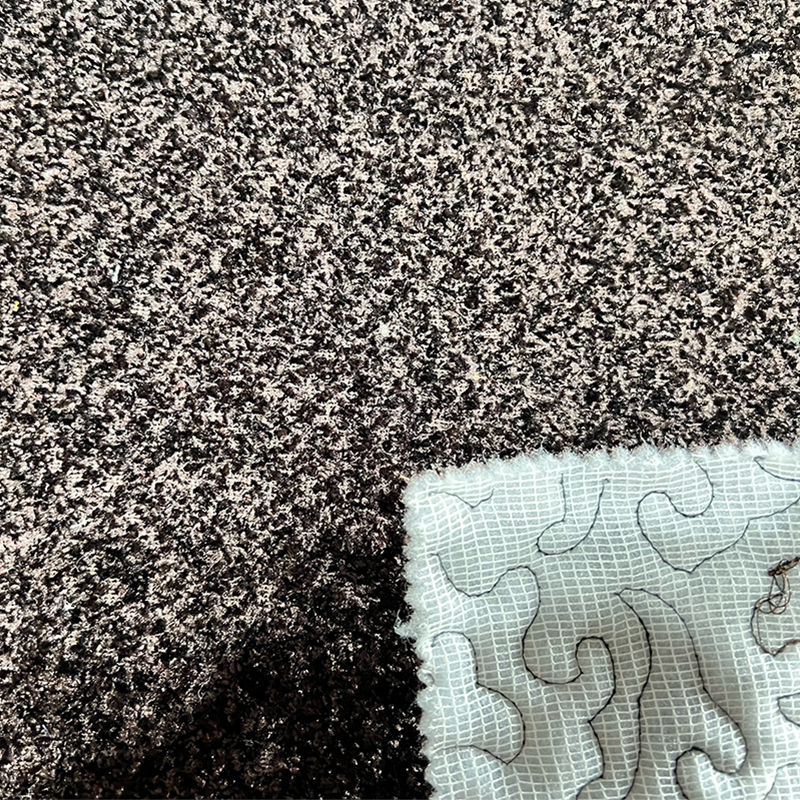
Reversible bonded fabric achieves this by combining two distinct fabric layers through a bonding process. Each layer contributes its own surface character—texture, color, print, sheen—while the bonded core holds them in permanent alignment. The result is a single material with two right sides and no wrong side.
This is different from a thick single-layer fabric. Weight and structure can be achieved many ways. What makes bonded fabric distinctive is the dual-surface finish that allows either face to serve as the exterior of a finished garment.
The Lining-Free Advantage: Why It Matters in Garment Construction
Lining exists to solve a problem: the interior of most garments is unfinished, and contact between raw fabric and the wearer's body—or inner clothing—creates both comfort and durability issues. Lining hides the construction and creates a smooth wearing surface.
Reversible bonded fabric makes lining unnecessary because the interior face is already finished. This creates several practical advantages that compound across a production run:
- Reduced component count. Eliminating the lining removes an entire fabric layer from the bill of materials. For outerwear produced at volume, this represents meaningful material cost reduction.
- Simplified construction. Attaching, aligning, and finishing a lining adds significant labor steps—especially at collar breaks, sleeve vents, and hem allowances. Without a lining, these operations are removed from the workflow.
- Lower total garment weight. Despite the bonded fabric being heavier than a single face, the absence of a lining keeps overall garment weight comparable to—or lower than—a lined equivalent. This is consistently noted as a counterintuitive benefit by designers who work with bonded constructions for the first time.
- Two-in-one versatility. A garment made from reversible bonded fabric is, functionally, two garments. One purchase covers two aesthetic options—different colors on each face, or a solid paired with a pattern. For capsule wardrobe buyers and frequent travelers, this efficiency has genuine appeal and commercial value.
- Clean interior presentation. Even when a wearer never reverses the garment, the finished interior face communicates quality at a glance. Unlined garments made from non-reversible fabric look unfinished inside; bonded reversible constructions look deliberate.
How Bonding Creates a Reversible, Lining-Free Structure
The bonding process is what enables two separate fabrics to function as a single coherent material. There are three primary methods, each suited to different base fabric combinations and performance requirements.
Adhesive bonding applies a thin layer of adhesive—typically a thermoplastic or polyurethane film—between the two fabric layers. The adhesive is then activated by heat and pressure, forming a durable laminate. This is the most common method for bonded outerwear fabrics and produces a consistent, reliable bond across the full width of the material.
Heat bonding (flame lamination) uses a flame to briefly melt a thin foam or polymer interlayer, which is then pressed between the two face fabrics. This method is valued for its minimal hand change—the resulting fabric retains more of the drape character of the base materials than adhesive bonding.
Ultrasonic bonding uses high-frequency vibrations to generate localized heat at the fiber-to-fiber contact points, fusing the layers without adhesive. This method is typically reserved for technical and performance applications where chemical adhesives are undesirable.
In all three cases, the outcome for garment construction is the same: a bonding fabric for structured outerwear and blazers that presents two clean surfaces, holds its shape without interfacing, and eliminates the need for a separate lining layer.
Best Garment Applications for Reversible Bonded Fabric
The structural properties of reversible bonded fabric—weight, stability, dual finish—make it best suited to garments where structure and surface quality are both visible requirements.
Blazers and tailored jackets are the most common application. The added body from the bonded construction supports lapels, chest shaping, and sleeve heads without requiring heavy interfacing. The absence of lining reduces interior bulk at the seams, which is particularly useful in structured silhouettes where excess material causes visual distortion at the chest break.
Outerwear coats benefit from the weight and warmth provided by the dual-layer structure, combined with the versatility of two exterior options. A solid-on-solid bonded coat functions as both a formal and a casual piece depending on which face is worn outward. A solid-on-pattern combination offers even greater range from a single garment.
Structured capes and ponchos are natural candidates because their construction relies heavily on the fabric providing its own body. Without internal structure from seams and darts, the fabric itself must hold the intended silhouette—which bonded fabrics do more reliably than single-face alternatives.
Explore our full range of special fabrics including bonded and functional constructions for current available options in each category.
Choosing the Right Base Fabrics for Bonding
The character of a finished bonded fabric is determined almost entirely by the base materials chosen for each face. This selection decision affects drape, weight, surface texture, and the performance of the bond itself.
Wool and wool blends are the traditional choice for bonded outerwear. Wool provides inherent structure, warmth, and natural recovery—it returns to shape after compression. A wool face bonded to a contrasting wool or silk-blend backing creates a fabric that handles like luxury outerwear with the construction simplicity of a lining-free system. Our double-faced woolen goods fabric is the reference point for this category.
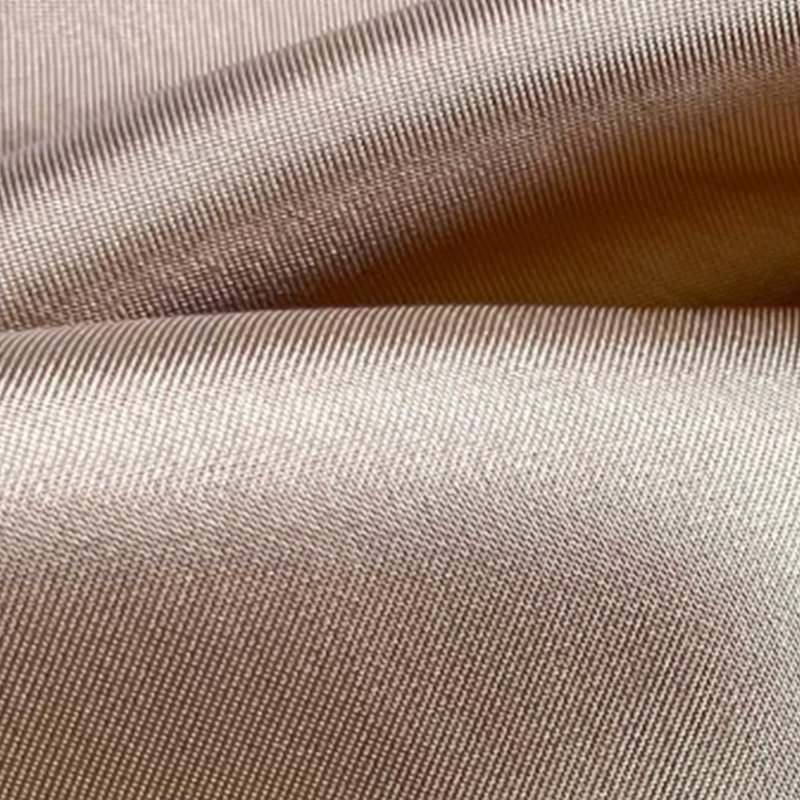
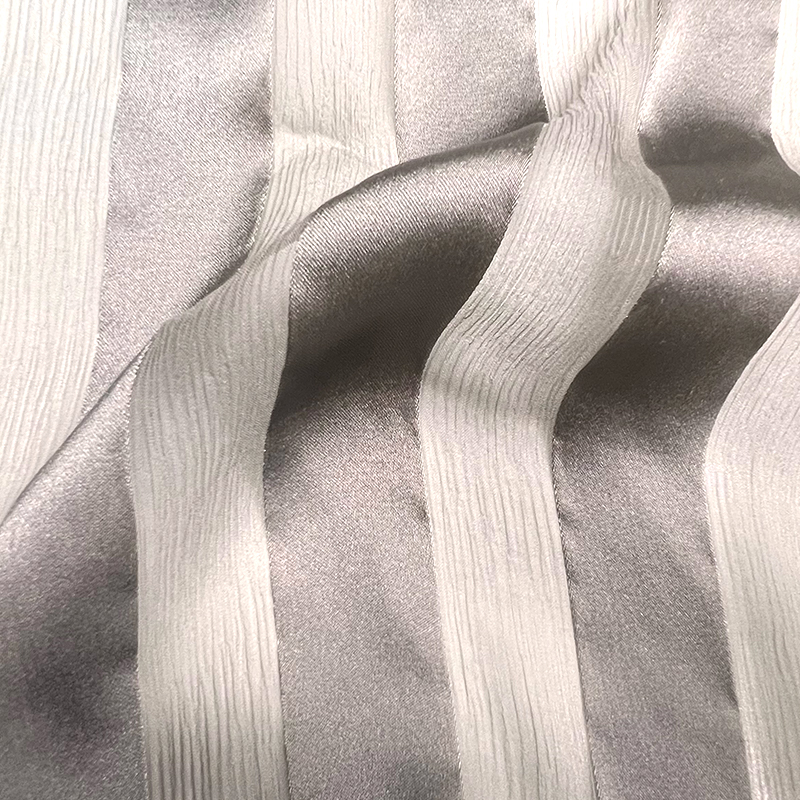
Silk and silk blends introduce drape and surface luminosity that wool cannot replicate. A silk-blend face bonded to a stable backing—whether a fine wool, a structured polyester, or a knit—creates a fabric with an elevated surface character. The bonded backing provides the body that silk alone often lacks for structured garments, making the combination particularly effective for blazers in lightweight suiting. Our silk and blend fabrics suitable for bonding base layers include options developed specifically for this type of composite construction.
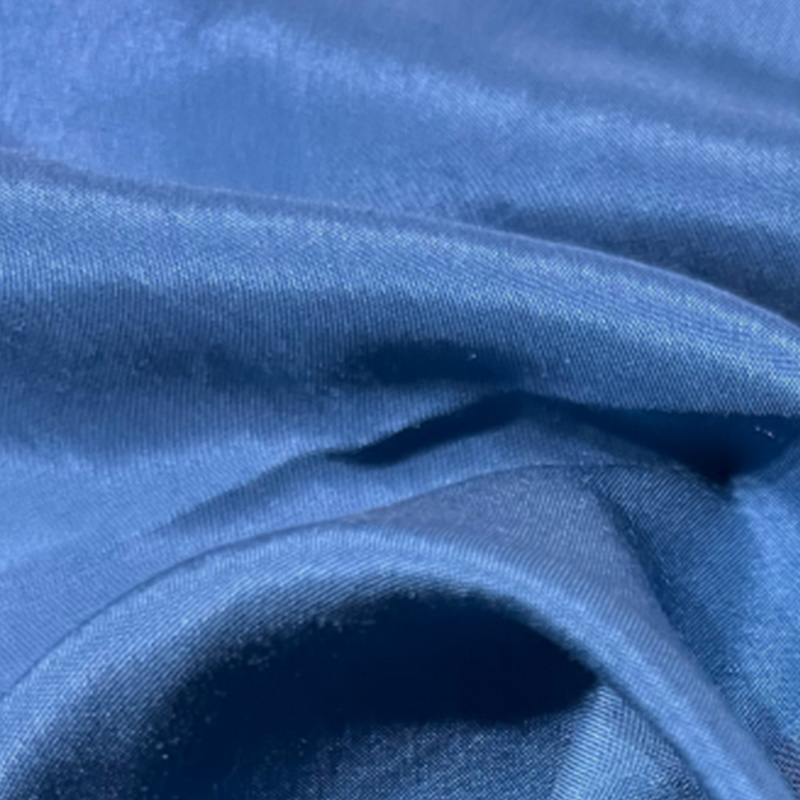
Polyester and poly-blend fabrics are practical choices for commercial production. They bond reliably, respond well to all three bonding methods, and offer consistent color reproduction—relevant when both faces need to carry print or precise solid color. Poly-blend bonded fabrics are also more forgiving in care requirements than natural fiber combinations.
One structural consideration when selecting base fabrics: the two layers should have compatible weight and stretch characteristics. Significant differences in extensibility between face and backing create stress at the bond line, which can lead to delamination over time—particularly at curved seam areas like armholes and collar stands.
Design and Sewing Considerations
Working with reversible bonded fabric requires different construction thinking than working with lined garments. The objective shifts from "conceal the interior" to "finish the interior as carefully as the exterior."
Seam finishing is the central challenge. In a lined garment, seam allowances are hidden inside the lining cavity. In a reversible construction, every seam allowance is visible from one face or the other. The standard approach is to separate the bonded layers at the seam allowance, trim and press them independently, and then fold each layer's edge inward so the folded edges meet and are hand-stitched together at the seam line. This produces a clean, flat finish visible from both sides—and is the construction detail that most clearly signals garment quality in reversible outerwear.
Closures require dual-functionality thinking. Standard buttons with a visible front and an anchor on the interior lining do not work in a reversible garment. Options include buttons that are set through both fabric faces simultaneously (with a smaller backing button on the interior face), snap fasteners integrated flush to both faces, or hidden zip closures that work from either side.
Hem and edge finishing should eliminate bulk and maintain reversibility. Double-fold hems, bound edges with matching or contrasting bias binding, and invisible hand stitching are the most commonly used approaches. Avoid any topstitching that creates a visible right-side / wrong-side distinction at the hem.
Pressing and heat sensitivity must be evaluated before cutting. Bonded fabrics vary in their response to heat depending on the bonding agent and base materials used. Always test pressing temperature and duration on a sample before applying heat to final garment pieces—particularly with adhesive-bonded constructions, where excessive heat can soften the bond or alter the drape of the face material.
 previous post