中文简体
中文简体 Français
 Deutsch
 italiano
Dupion Silk Fabric and Its Iridescent Effect: What Makes It Uniquely Luminous
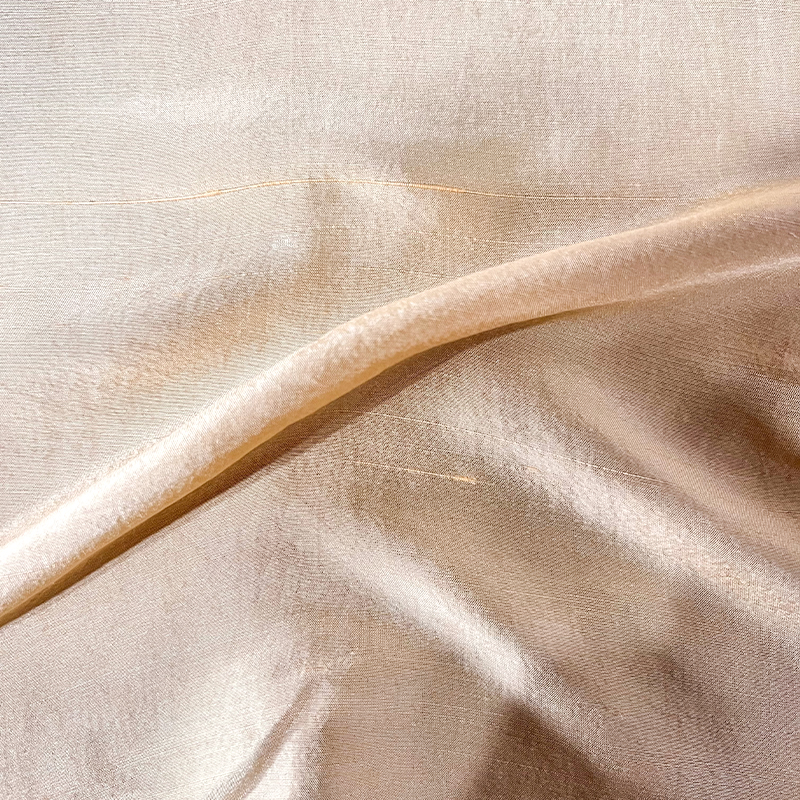
Some fabrics catch the light. Dupion silk fabric does something more — it changes with it. Shift your angle, and the surface shifts color. Hold it under direct light, and the slubs and knots cast subtle shadows that make the cloth look three-dimensional. This is not a finishing treatment or a coating. It comes entirely from how the yarn is formed and how the fabric is woven.
For designers, buyers, and brands working with premium textiles, understanding what produces this effect — and how to source it consistently — matters as much as the visual result itself.
Content
The Science Behind Dupion Silk Fabric's Iridescent Effect
Dupion silk begins at the cocoon stage, where it diverges from all other silk types. Standard silk yarn is reeled from a single silkworm cocoon, producing a fine, even thread with uniform diameter. Dupion yarn comes from a double cocoon — one shared by two silkworms spinning simultaneously. Because each silkworm pulls in a slightly different direction, the resulting yarn is uneven: thicker in some sections, thinner in others, with natural slubs, knots, and irregularities built into the fiber itself.
This unevenness is not a flaw. It is the structural foundation of everything that makes dupion silk fabric visually distinctive.
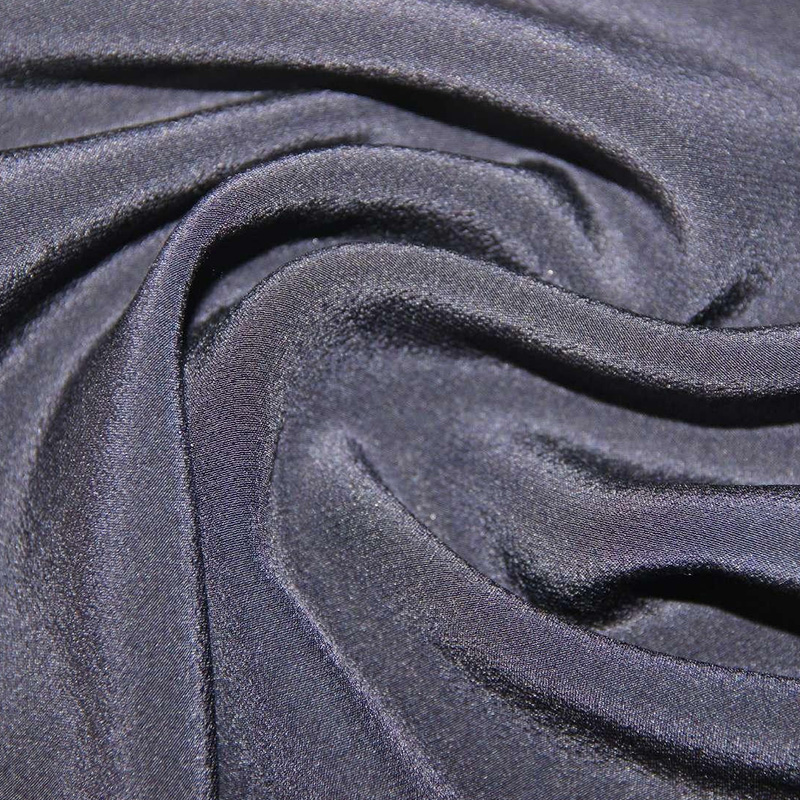
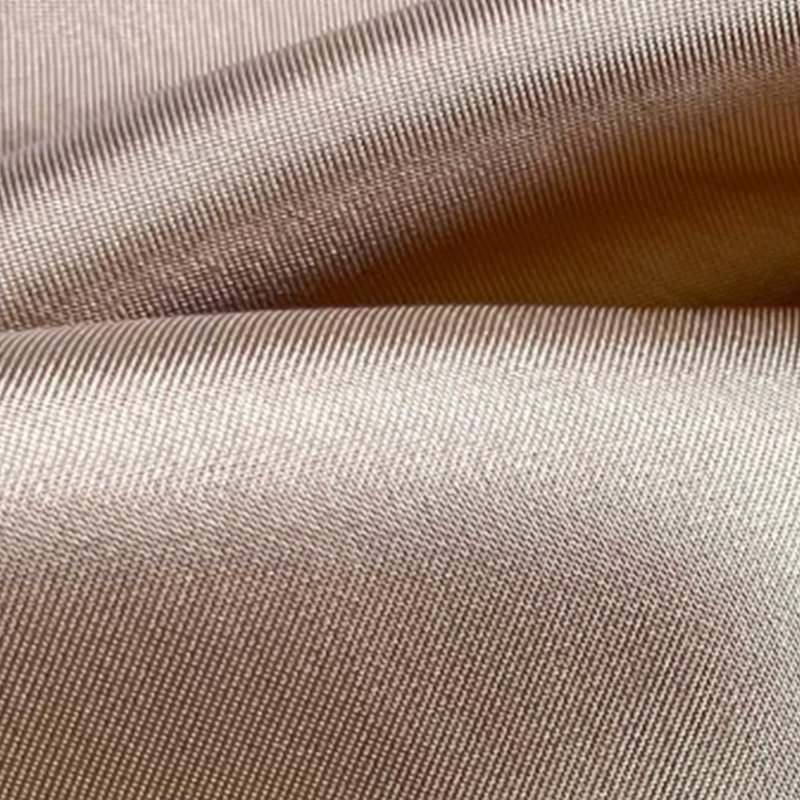
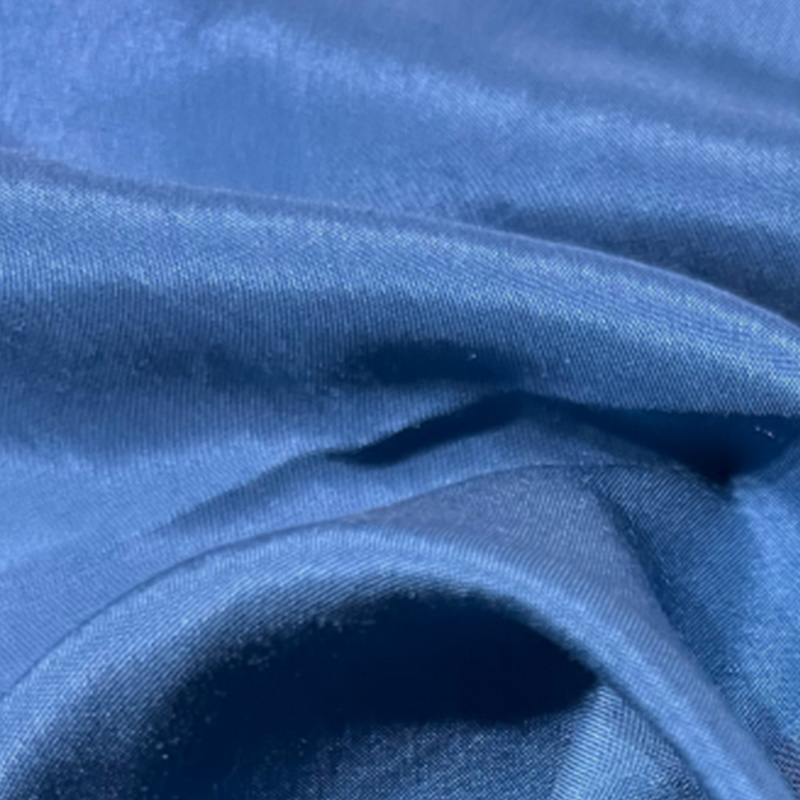
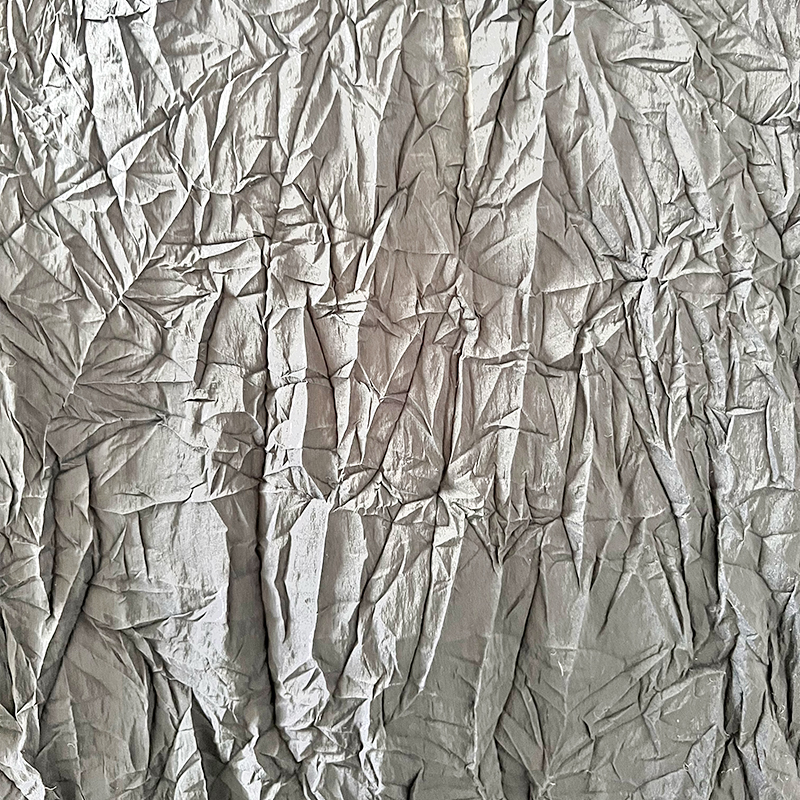
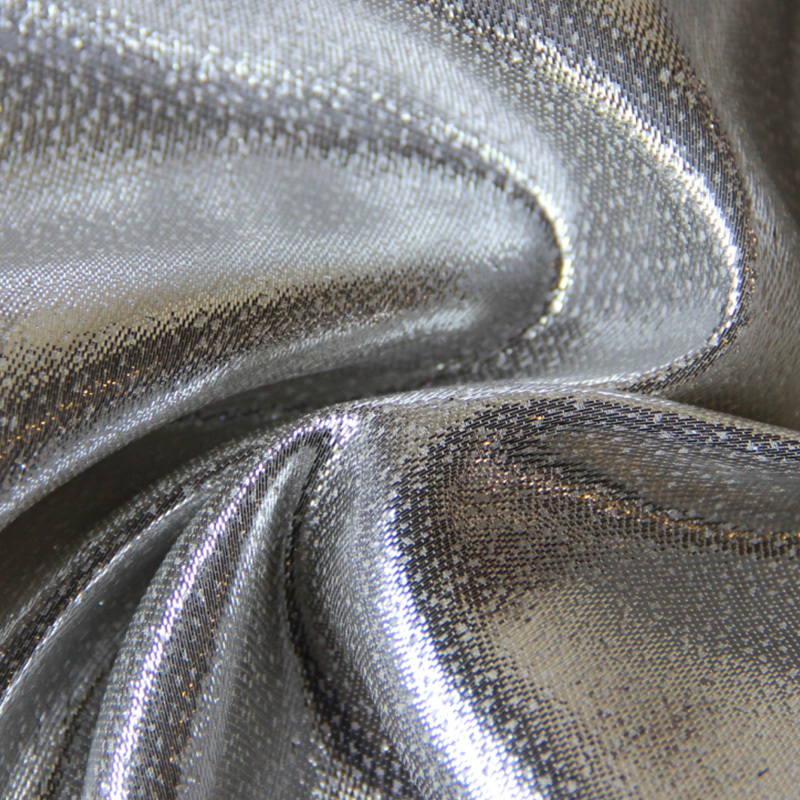
The iridescent effect, specifically, comes from a weaving technique that pairs this irregular dupion yarn with contrasting-color threads. When the warp and weft are woven in different colors, light hitting the fabric surface is reflected at slightly different wavelengths depending on the viewing angle. The result is a color-shifting shimmer — cooler tones reading from one direction, warmer tones from another — that moves with the fabric as it drapes or the viewer shifts position. This is the same optical principle behind shot silk taffeta, though dupion's surface texture gives the effect greater depth and a more grounded, luxurious character.
The slubs reinforce this further. Each raised bump creates a micro-shadow and a localized change in surface angle, so the fabric appears to have dimension even under flat lighting. Under directional or natural light, the three-dimensional quality becomes pronounced — one of the reasons dupion silk reads so well in photography and on stage.
What Sets Dupion Silk Apart from Regular Silk
The differences between dupion silk fabric and conventional mulberry silk go beyond appearance. They reflect fundamentally different yarn structures that produce different behaviors in use.
Regular silk — reeled from single cocoons — is prized for its uniformity: even diameter, smooth surface, and the soft, fluid drape associated with silk charmeuse or crepe de chine. Dupion silk trades some of that smoothness for character. The surface is crisp rather than fluid, with a body that holds its shape more readily. It drapes with elegance, but with structure — it doesn't cling or collapse the way lighter silk types do.
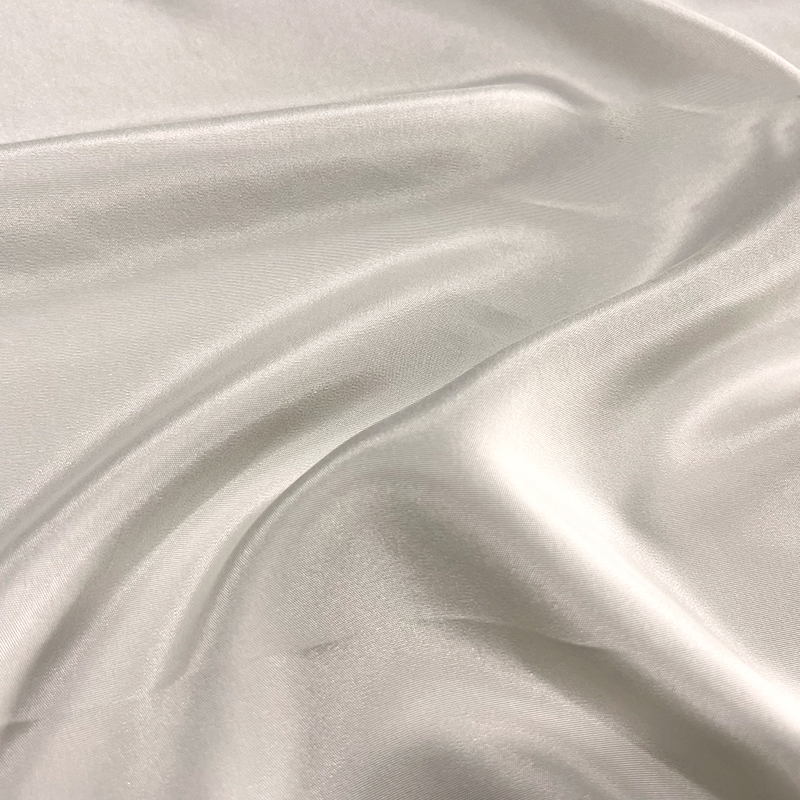
The luster profiles also differ. Conventional silk has a smooth, mirror-like sheen. Dupion silk's sheen is more complex: the irregular surface scatters light rather than reflecting it cleanly, producing a richer, more layered luminosity. This is what gives iridescent dupion silk fabric its depth — the shimmer reads differently at every angle rather than staying constant.
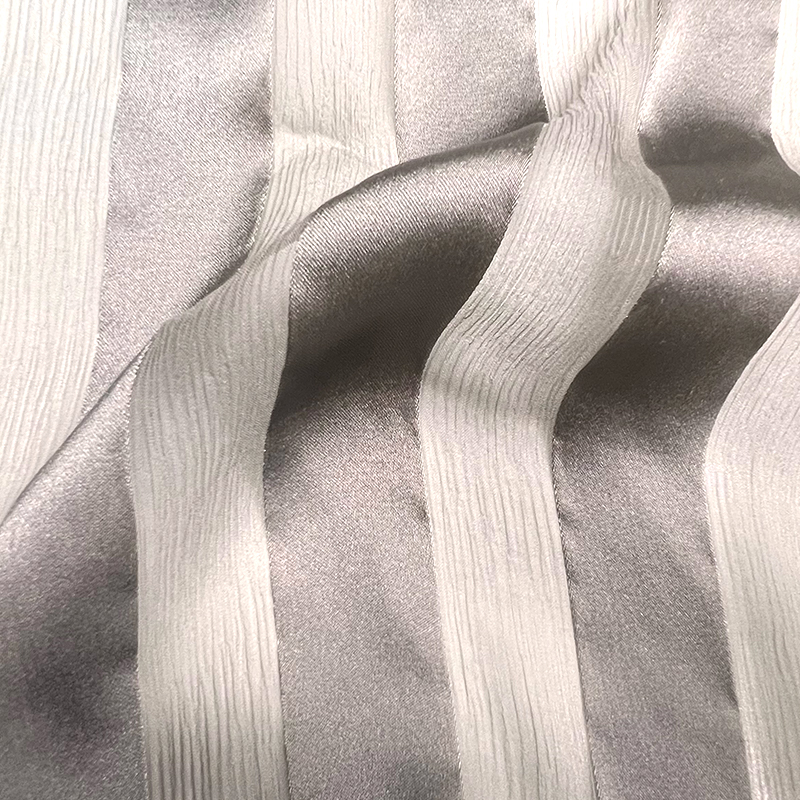
For buyers evaluating options across mulberry silk and specialty silk fabric collections, dupion sits in a distinct category: structured enough for tailored applications, textured enough to carry visual interest on its own without print or embellishment.
From Fabric to Finished Product: Where Dupion Silk Shines
Dupion silk fabric has broad application across both fashion and interiors — a versatility that follows directly from its structural properties.
In apparel, the fabric's natural body makes it well suited to garments that benefit from structure. Jackets and coats hold their silhouette without requiring heavy interfacing. Scarves and wraps carry the iridescent effect beautifully in motion, the color shifting as the fabric moves. Ties in dupion silk have long been associated with a certain formality and finish — the slub texture reads as deliberate craftsmanship rather than imperfection, and the sheen holds up under the close visual scrutiny that neckwear invites.
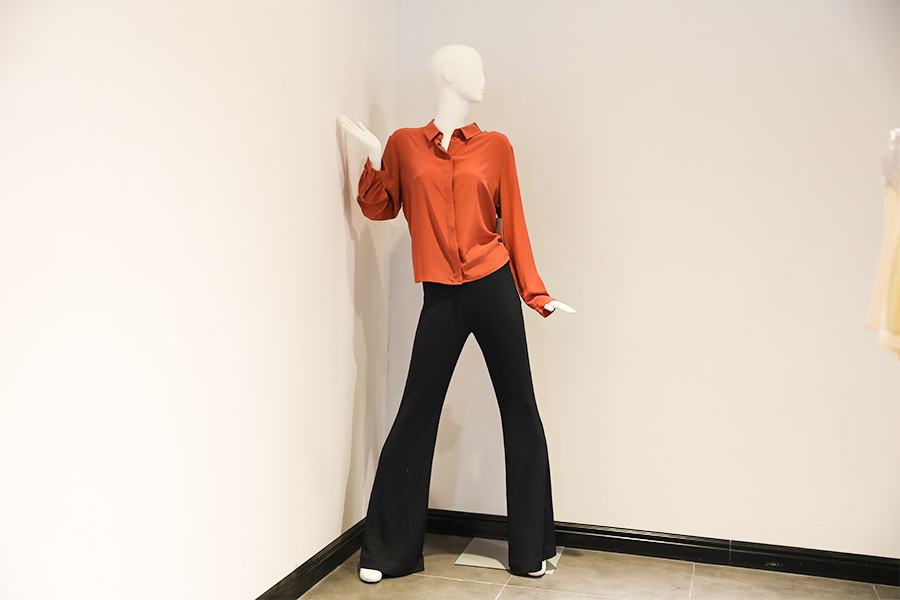
For tops and blouses, dupion offers a middle ground between the casualness of linen and the formality of satin — textured enough to feel relaxed, refined enough to read as elevated. It photographs exceptionally well, which has sustained its popularity in fashion editorial and commercial contexts.
In interior applications, dupion silk fabric performs as both a decorative and functional material. Curtains and drapes in dupion catch and diffuse light rather than blocking it, creating a soft glow in the room rather than a flat barrier. Cushion covers and upholstery panels gain visual depth from the slub texture. Table runners and decorative accessories carry the iridescent quality into domestic spaces where conventional fabrics would simply lie flat.
Dyeing, Printing, and Customization Possibilities
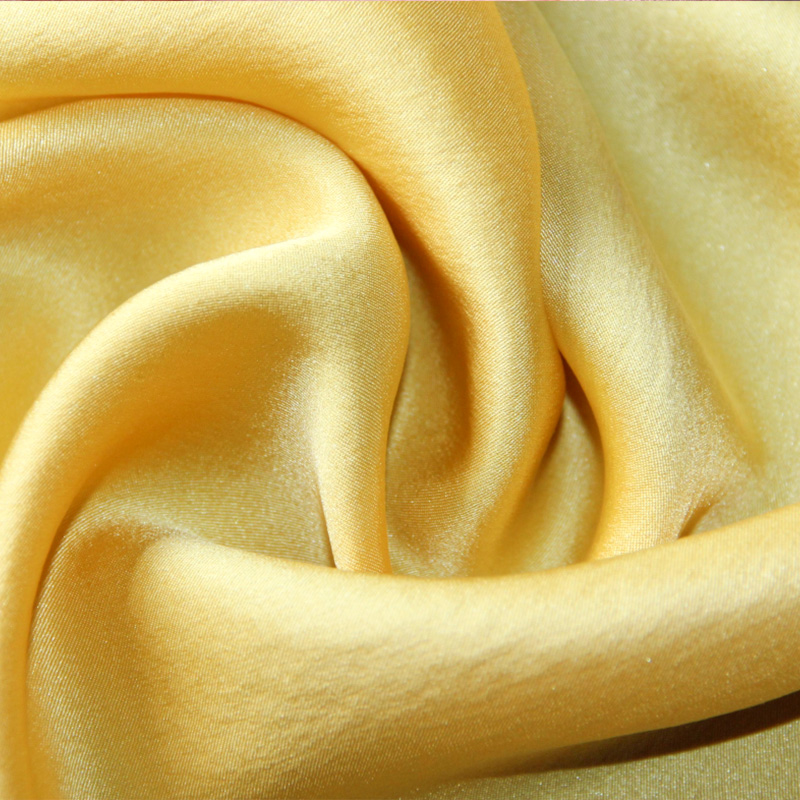
One of the less-discussed advantages of dupion silk fabric is its exceptional response to color. Silk protein fiber absorbs dye molecules at a molecular level, producing saturation and clarity that synthetic alternatives cannot replicate. In dupion specifically, the irregular yarn structure adds another dimension: because the slubs and base yarn absorb dye at slightly different rates, solid-color dupion often has a natural tonal variation that enhances the iridescent quality rather than flattening it.
This makes dupion silk particularly effective for piece-dyeing in rich, saturated tones — jewel colors, deep neutrals, and complex hues all render with a vibrancy that matches the fabric's inherent visual energy. For the iridescent version, yarn-dyeing the warp and weft in contrasting colors before weaving allows precise control over the color-shift effect, with the combination of warp and weft tones determining the range of hues visible at different angles.
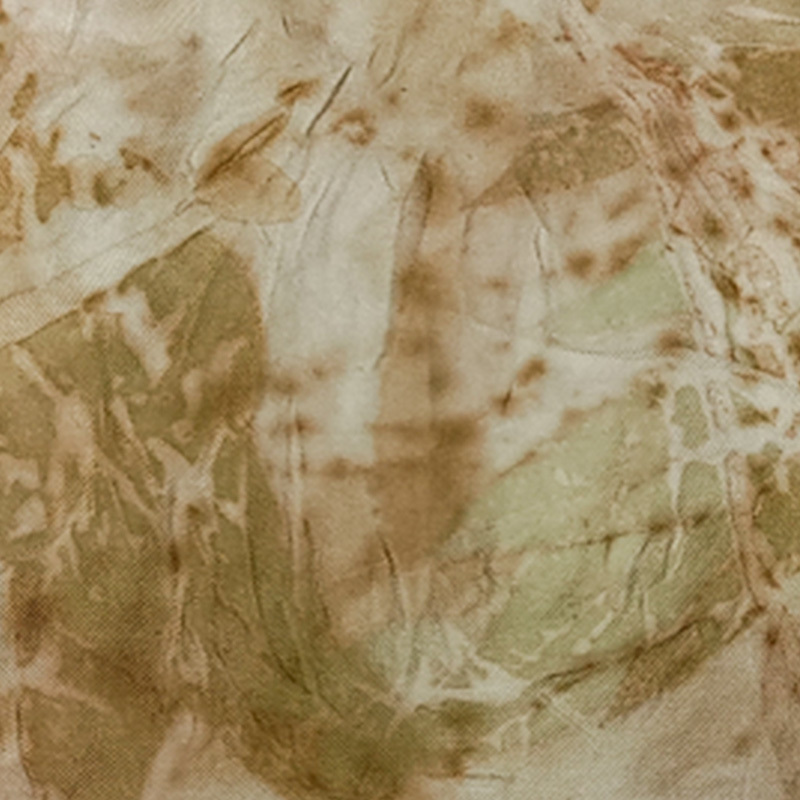
Digital and screen printing on dupion silk produces sharp detail with excellent color fidelity, though the slub texture means that very fine line work requires careful consideration at the design stage. For scarves, ties, and panel-based home textiles, printed dupion has become a preferred substrate precisely because the base fabric contributes its own visual character to the finished piece rather than acting as a neutral ground.
For brands and buyers looking to develop collections around this material, custom dyeing and printing capabilities for silk fabrics allow full control over color, finish, and repeat — from sampling through to bulk production. Those with an interest in responsible sourcing will also find value in exploring sustainable silk fabric options that bring the same material quality with verified environmental credentials.
Dupion silk fabric has been in use for centuries. Its iridescent quality is not a trend — it is a structural feature that no processing shortcut can replicate. That consistency of origin is precisely why it remains one of the most reliably distinctive materials available to designers and manufacturers working at the premium end of the market.
 previous post